The presence of deadwood is part of a tree’s natural life cycle. Not every dead branch needs to be removed.
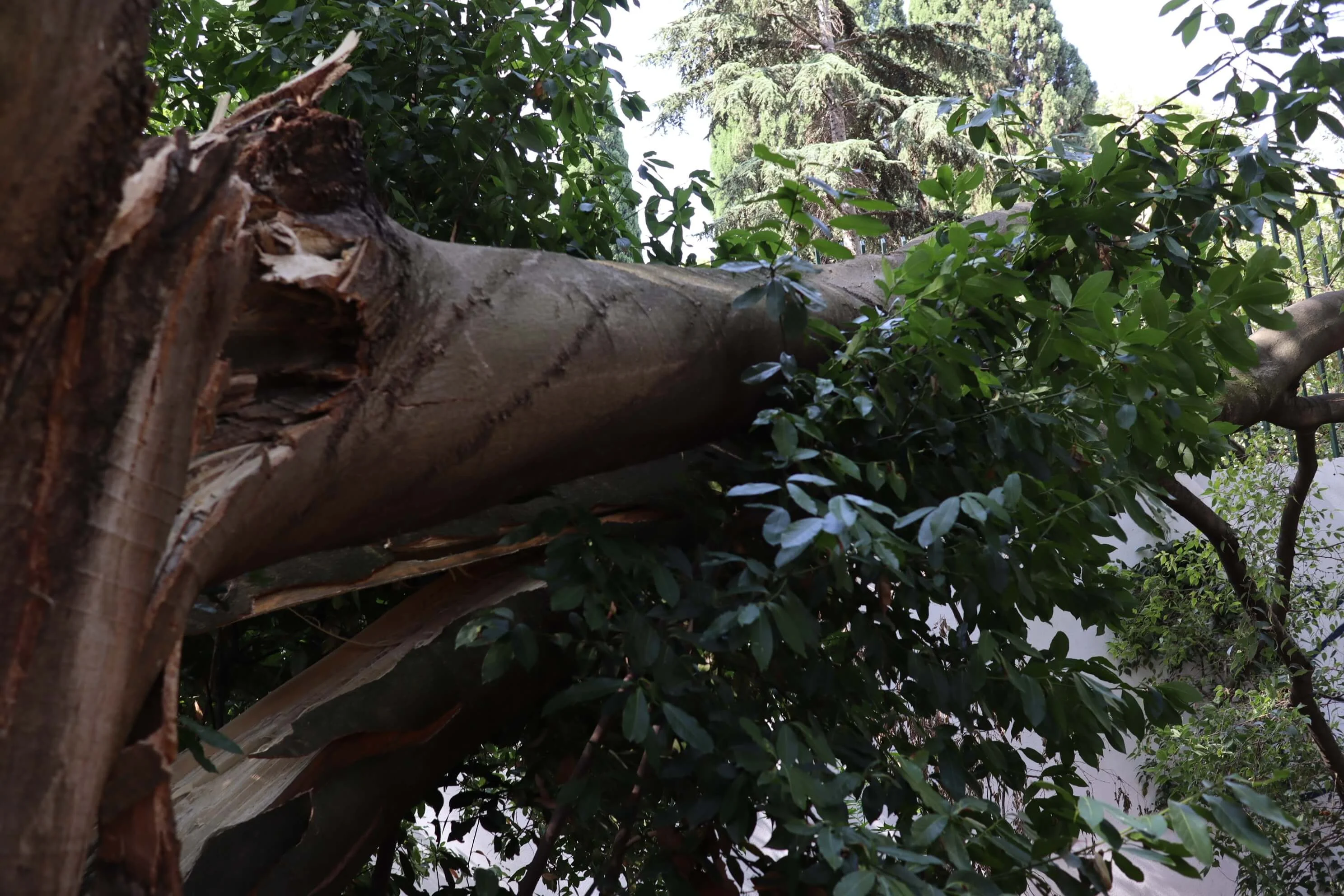
However, when a dead branch is above a house, a car park, a footpath, a road, or another well-used area, its potential fall can pose a risk to people and property.
Il Tree Climber carries out removal of deadwood and hazardous dead branches, assessing which parts genuinely need to be removed and which can be left in place safely.
The goal is to act selectively: reduce risk without unnecessarily eliminating a natural and ecologically important part of the tree.
When can a dead branch become a problem?
Over time, a dead branch progressively loses the mechanical properties of living wood and can break or detach from the crown. But the mere presence of deadwood doesn’t automatically mean there’s a hazard.
Several factors matter:
- the size and weight of the branch
- the height at which it sits
- how degraded the wood is
- its position within the crown
- whether people, buildings, vehicles, or other structures are underneath
- how often the area beneath it is used
A dead branch above a busy path, for example, is a different situation to deadwood in a part of the tree far from people or property. This is why removing dead branches has to be targeted to the tree’s actual condition and its location.
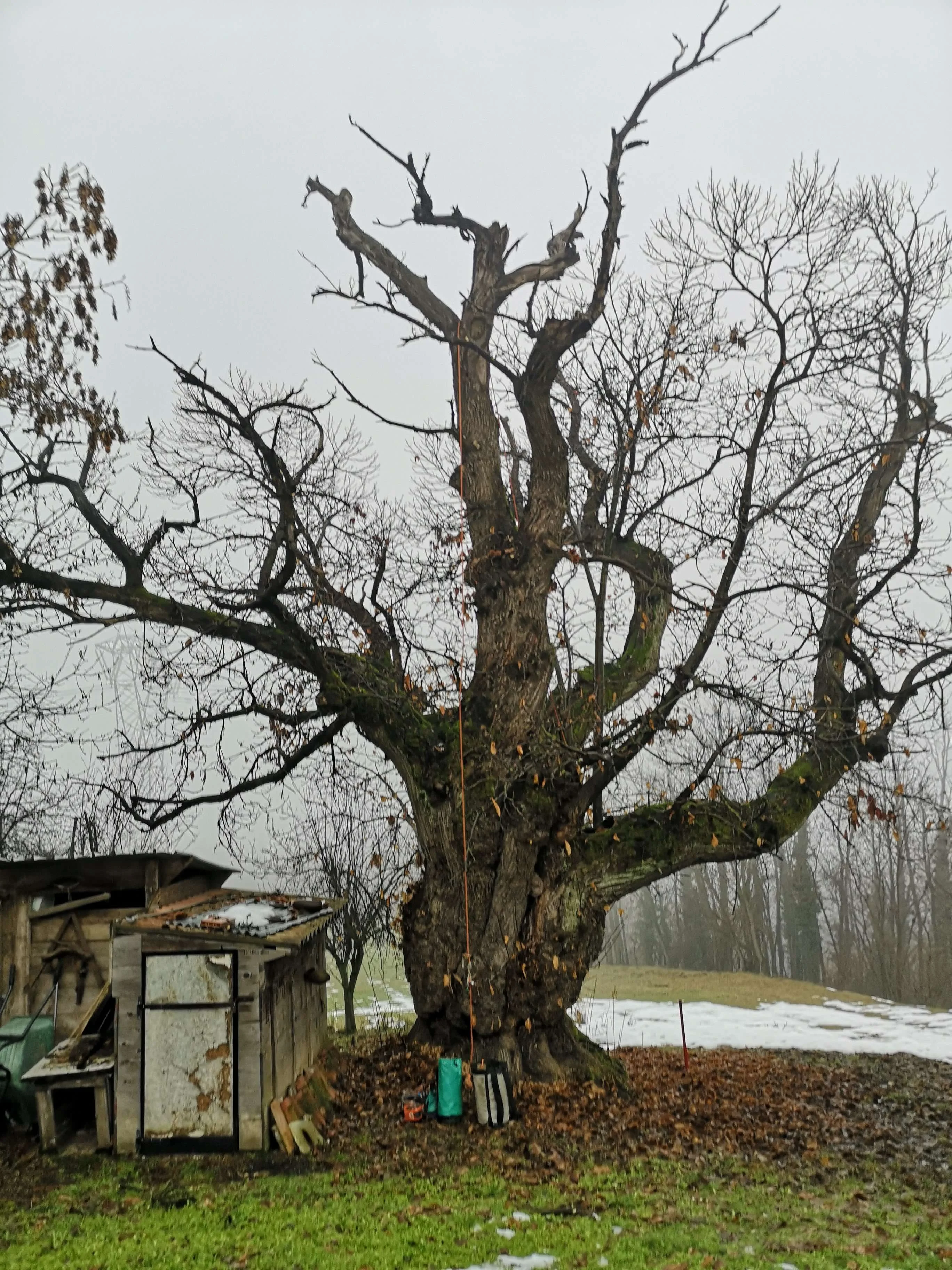
Removing dead branches from tall trees
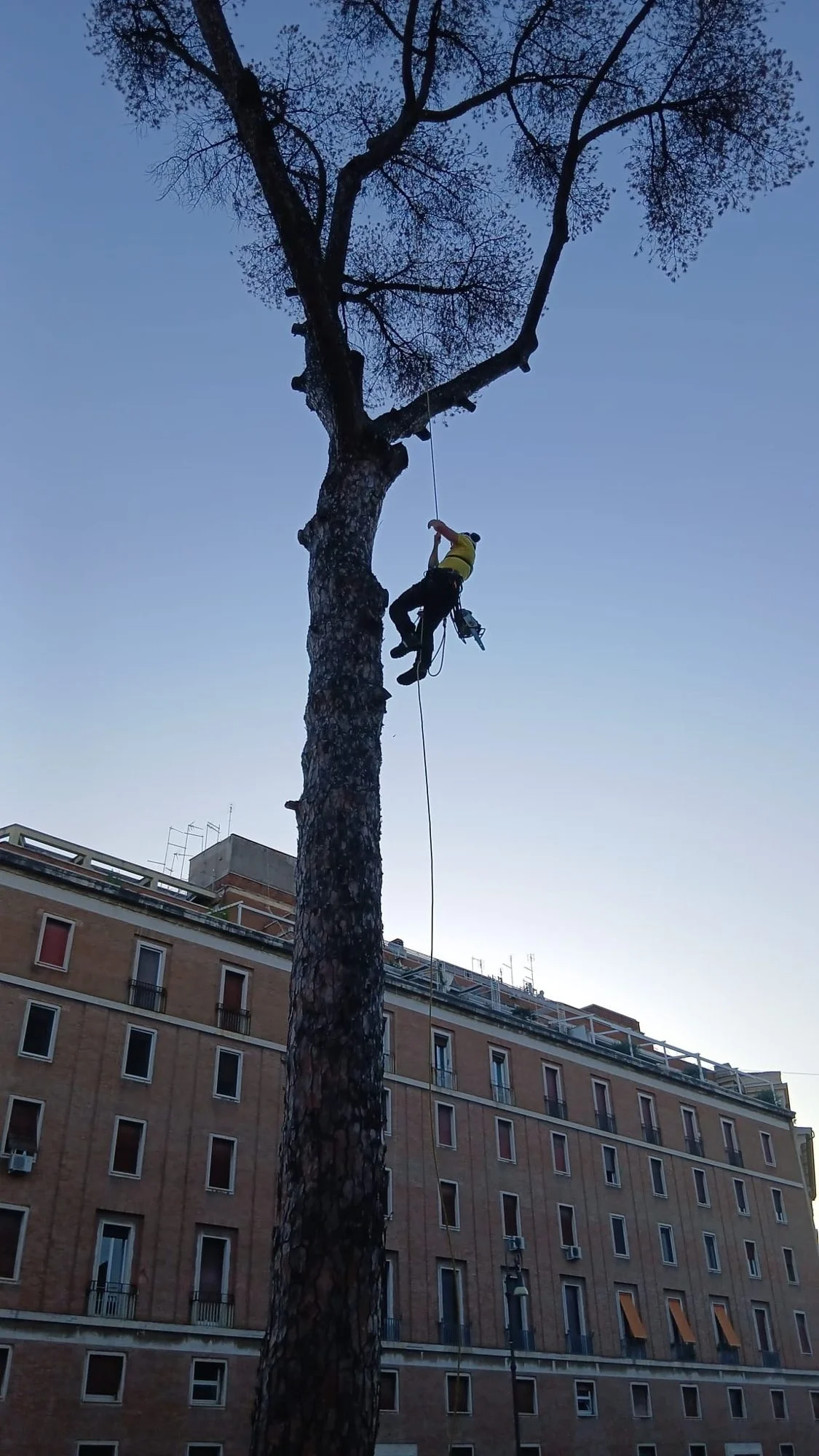
Deadwood can also be found in the highest, hardest-to-reach parts of the crown. On tall trees, identifying and reaching affected branches often requires direct access into the crown.
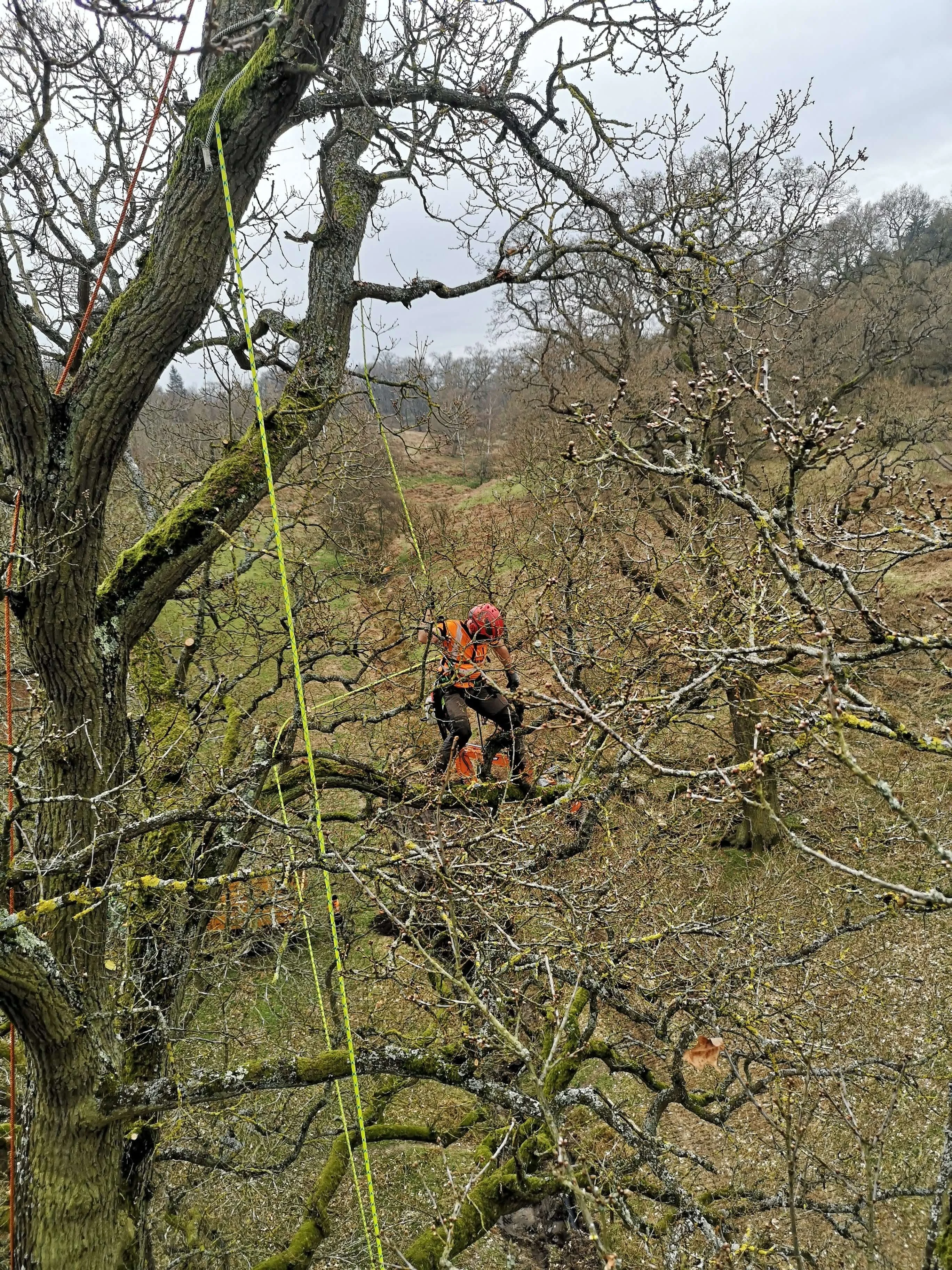
Using tree climbing techniques, it’s possible to move through the tree using ropes and positioning systems, reaching even dead branches in hard-to-access spots. This allows for selective removal of deadwood, avoiding unnecessary work on healthy parts of the crown. When needed, the descent of removed branches can also be controlled to protect buildings, paving, fencing, plants, and other structures below.
Not all deadwood needs to be removed
Deadwood isn’t simply waste. Within a tree and its surrounding environment, it can provide an important habitat for insects, fungi, birds, and other organisms, contributing to biodiversity and the ecosystem’s natural processes.
For this reason, systematically removing every dead part of the crown isn’t always necessary or desirable. Where site conditions allow, some deadwood can be left in place without compromising the safety of the area.
Il Tree Climber’s approach is therefore to strike a balance: reduce risk where deadwood could have significant consequences, and preserve it where it can keep serving its ecological function at an acceptable level of safety.
Deadwood removal (rimonda del secco): a selective operation
Removing dead branches is often referred to as rimonda del secco. The work involves identifying and removing deadwood from the crown that, due to its size, position, or condition, requires attention. It doesn’t necessarily mean stripping a tree of every last small dead twig.
Careful deadwood removal takes into account the context and objective of the work, focusing especially on the parts that could have significant consequences if they failed. This keeps the intervention limited to what’s genuinely necessary.
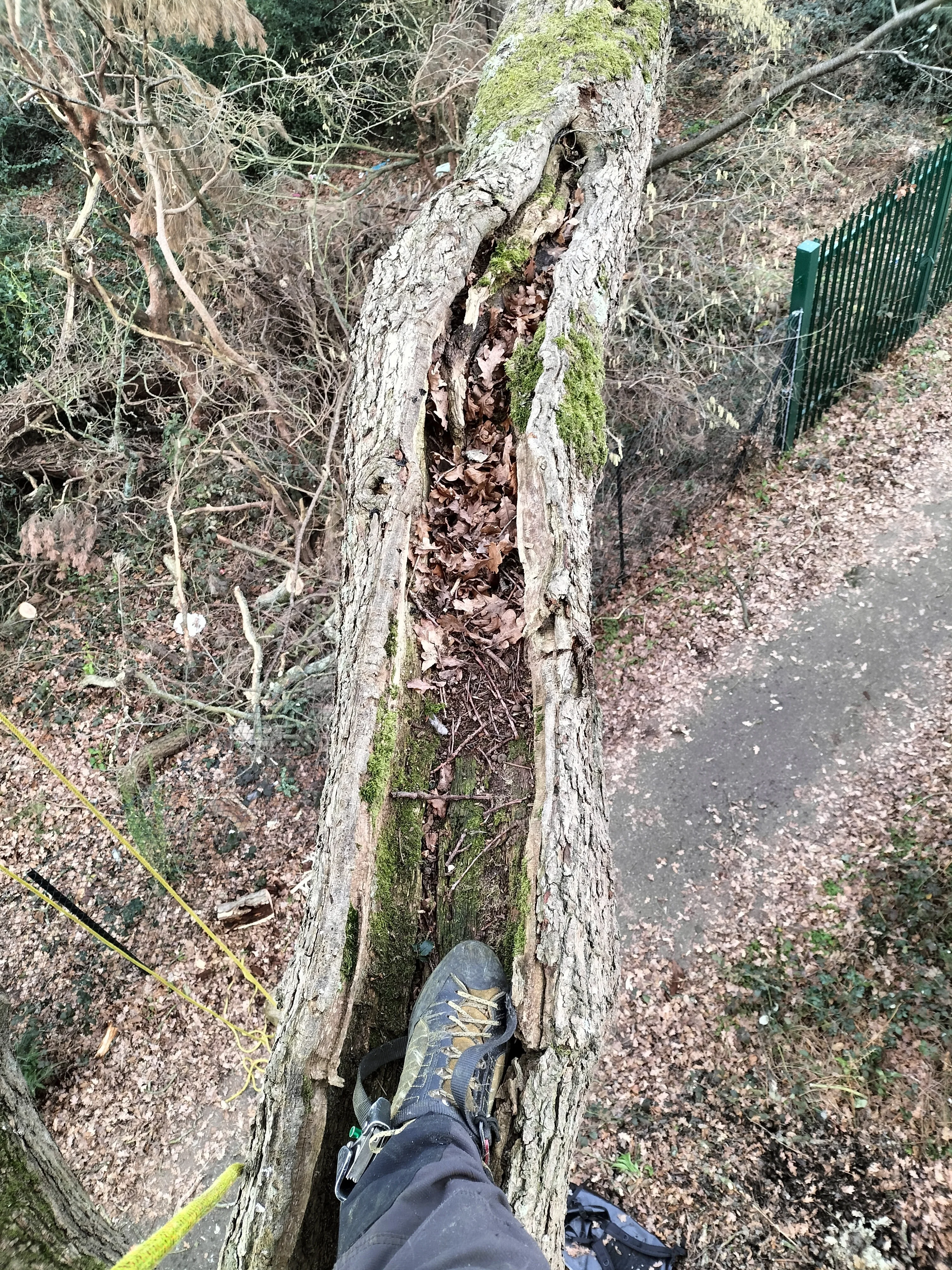
How to spot deadwood
Some dead branches are easy to recognise from the ground, while others are harder to distinguish, especially on very large or densely-crowned trees. Possible signs include:
- absence of leaves during the growing season
- bark that is peeling away
- dry or broken branch tips
- branches with no foliage while the rest of the crown is active
- signs of old breaks
- hanging or partially detached branches
Observation from the ground doesn’t always allow the condition of a branch to be assessed precisely. Where necessary, access into the crown allows closer inspection and a clearer picture of which parts genuinely need attention.
Dead branches above houses, roads, and busy areas
The position of deadwood is one of the most important factors in deciding whether to intervene. A dead branch may need particular attention when it’s above:
- homes and roofs
- terraces and courtyards
- car parks
- roads and driveways
- pavements and paths
- play areas
- rest areas
- gardens and busy spaces
In these cases, the goal is to identify the parts of the crown that could pose a risk and act proportionately. The presence of deadwood doesn’t automatically mean the whole tree needs to come down — often, the situation can be managed by working only on the branches involved, keeping the rest of the tree in place.
Removing deadwood by tree climbing
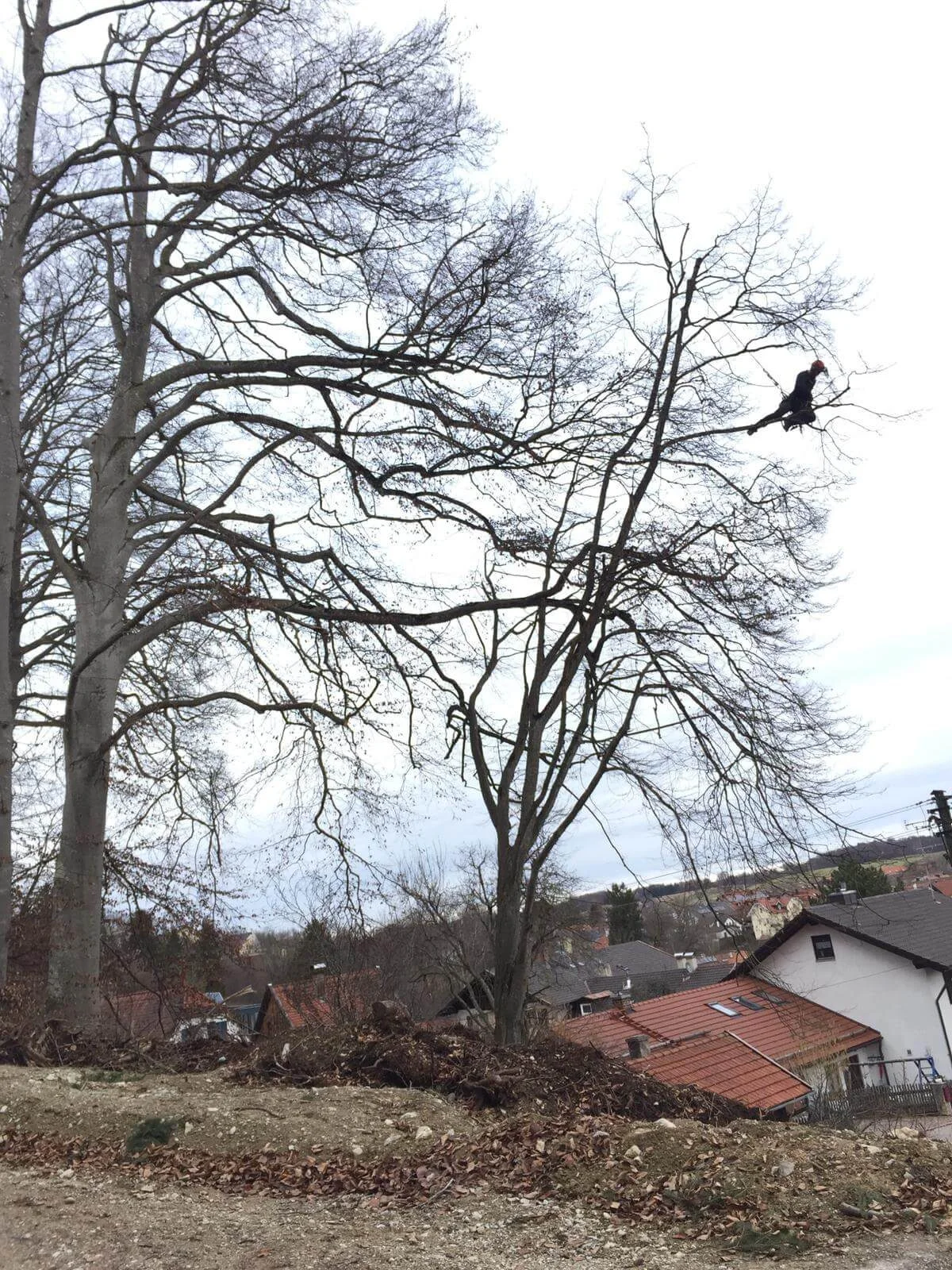
Tree climbing makes it possible to reach dead branches directly, even in the highest or outermost parts of the crown. The operator accesses the tree by rope and can move between the different zones to be checked, working selectively.
This technique is especially useful in gardens and spaces where access with platforms is difficult, or where using heavy machinery wouldn’t be practical. Tree-climbing access also allows close observation of branches and attachment points that can be hard to assess from the ground.
How much does it cost to remove dead branches from a tree?
The cost of deadwood removal depends on the tree’s characteristics and the complexity of the work. Key factors include:
- the tree’s height and size
- the amount of deadwood present
- the size of the branches to be removed
- their position within the crown
- the tree’s accessibility
- whether there are buildings or other structures below
- whether branch descent needs to be controlled
- how the removed material is handled
A small, easily reached dead branch clearly requires different work to numerous dead branches high up in a large tree above a house. This is why cost is set after assessing the tree, the wood to be removed, and the characteristics of the surrounding area.
Preserving the tree while managing what poses a risk
The presence of dead branches doesn’t necessarily mean a tree is compromised or needs to be felled. The death of individual branches can be part of the crown’s natural development and can be managed through specific work.
Where possible, Il Tree Climber favours a conservative approach: remove the deadwood that needs attention, and preserve what can be kept without creating unacceptable risk to the surrounding area.
Have dead branches on a tree?
If you’ve noticed dead branches, or parts of the crown that could fall onto a busy area, the situation can be assessed to establish whether action is needed.
Contact Il Tree Climber for an assessment and a quote for deadwood removal.