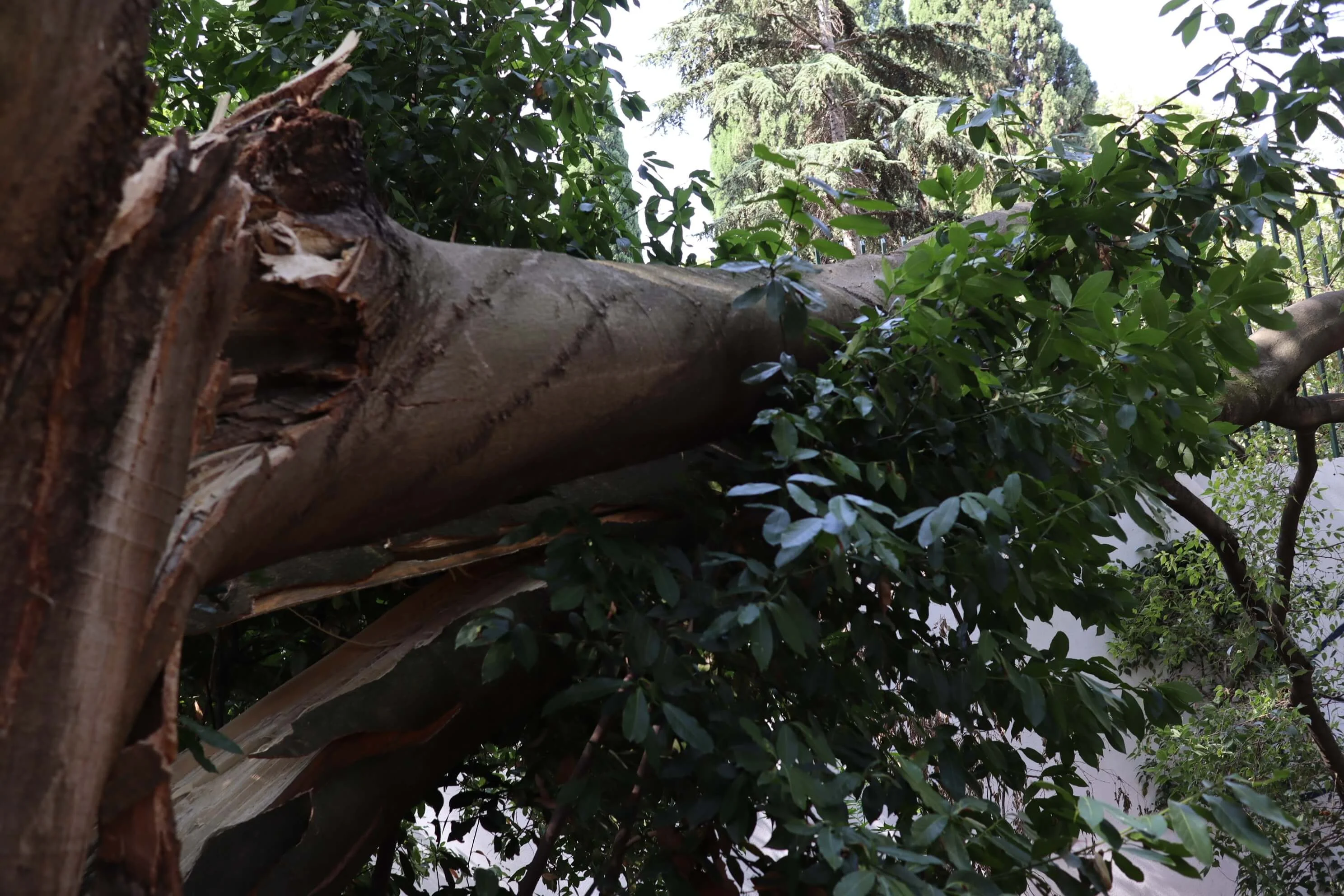
Strong wind, heavy rain, and storms can cause branches to break, parts of a crown to fail, or — in the worst cases — a whole tree to fall or become uprooted, within a matter of minutes.
After a severe weather event, it’s important to respond decisively, prioritising the safety of people and property while also assessing which parts of the tree can be preserved.
Il Tree Climber carries out emergency work on trees damaged by storms, wind, and other sudden events, stabilising the situation, carrying out controlled removal of hazardous parts, and — where possible — preserving whatever structure remains intact.
The goal isn’t to automatically remove everything that’s been damaged, but to remove the immediate danger and identify the most appropriate solution for the tree.
What can happen to a tree during a storm?
Every tree reacts differently to severe stress. Wind can place considerable loads on the crown, while heavy rain can change ground conditions. Already-weakened branches, old wounds, or particular structural features can become especially significant during extreme weather.
After a storm, you may see:
- branches broken, partially detached, or hanging in the crown
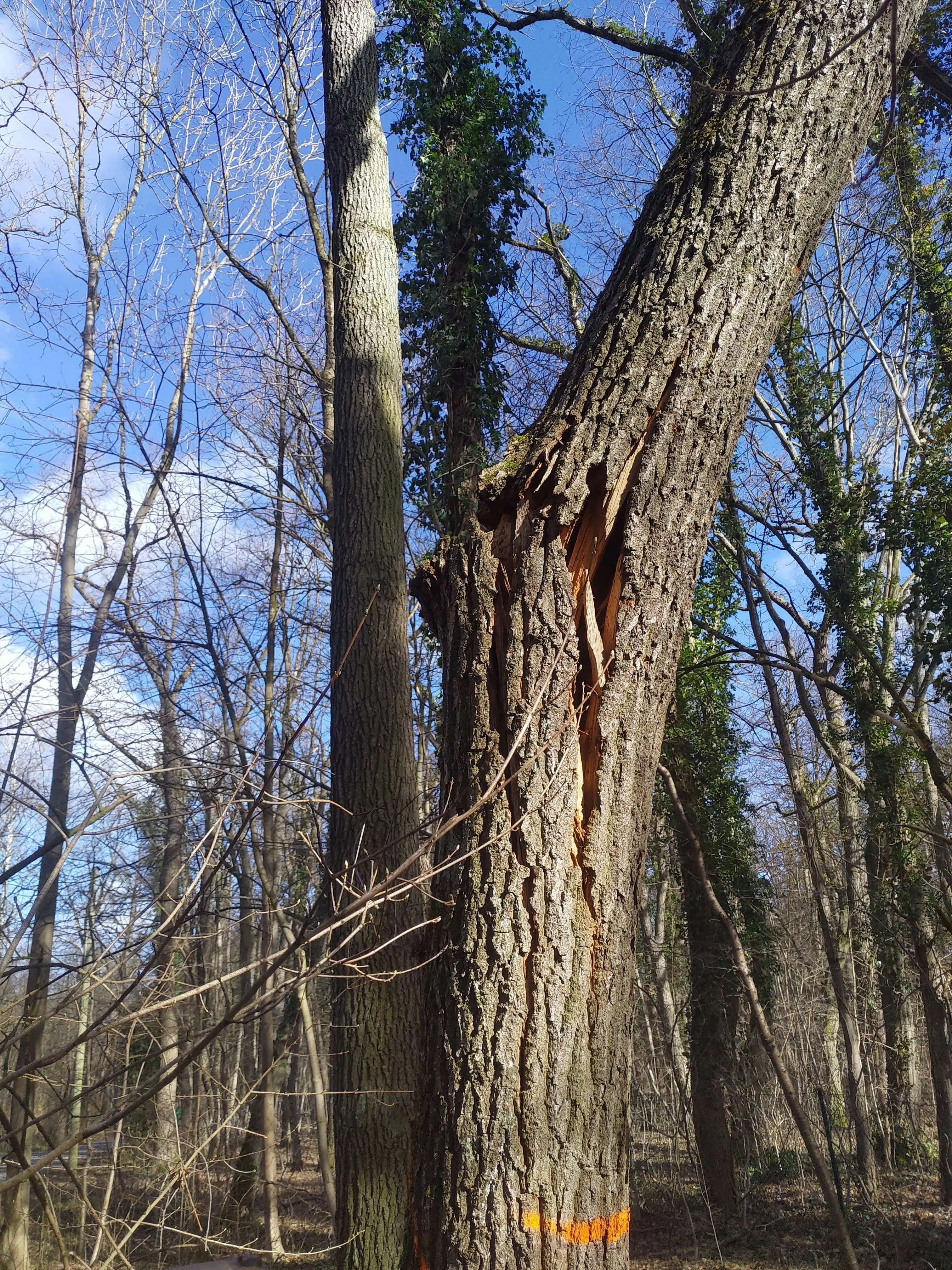
- cracking at forks and failure of parts of the crown
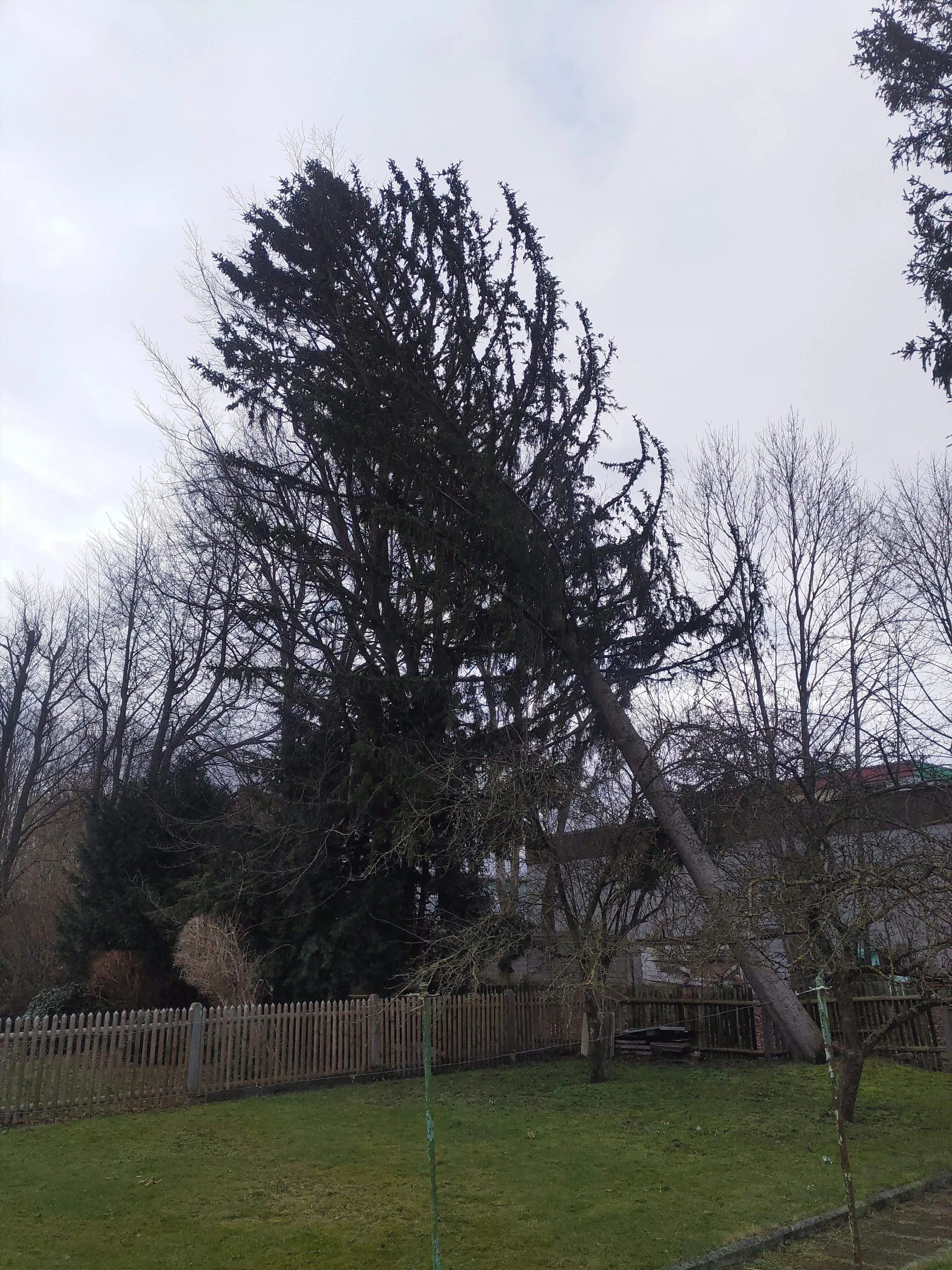
- leaning or shifting trees, and disturbance of the ground around the roots
- trees resting against other trees, buildings, or structures
- damage caused by other trees falling
- partial or complete structural failure
Some damage is immediately obvious, while other damage may be high in the crown and hard to spot from the ground.
The priority: making the area safe
In an emergency situation, the first priority is identifying what represents an immediate risk. A large broken branch left hanging over a house, a path, a car park, or another busy area needs different handling to damage in a part of the tree far from people and structures.
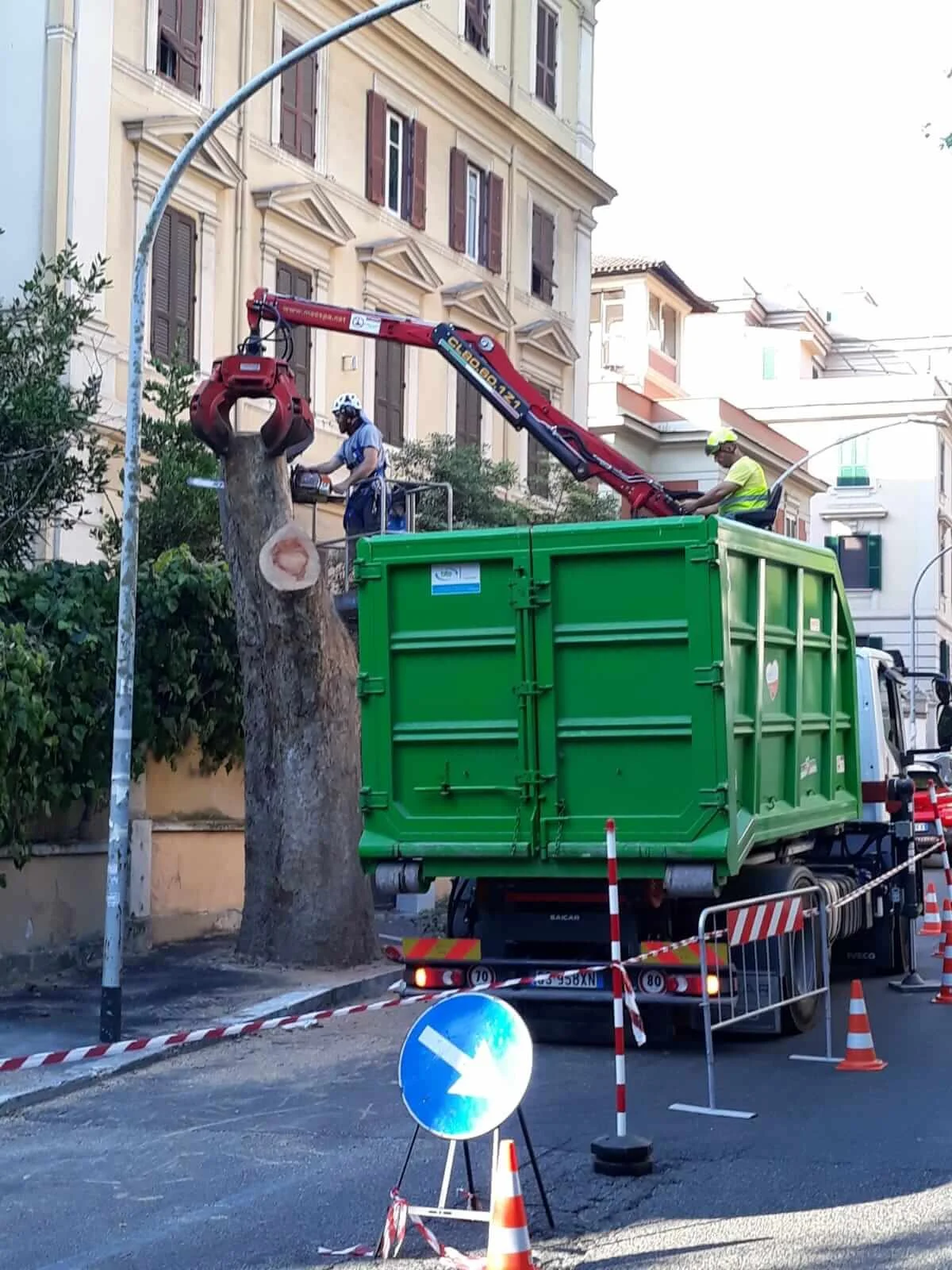
Depending on the situation, work may involve removing broken or suspended branches, controlled removal of unstable parts, targeted thinning of the crown, or managing partially failed trees. In more complex cases, controlled dismantling of the damaged section, or temporary or permanent stabilisation, may be needed where technically appropriate. Once the most critical situation is under control, clearing fallen material may also be required.
Every job is defined based on the tree’s actual condition and what’s in the surrounding area.
Broken or hanging branches in the crown
One of the most common problems after strong wind and storms is broken branches that haven’t yet fallen to the ground. A branch can become lodged in the crown, rest against other branches, or remain partially attached to the tree. These situations can be particularly difficult to assess from the ground.
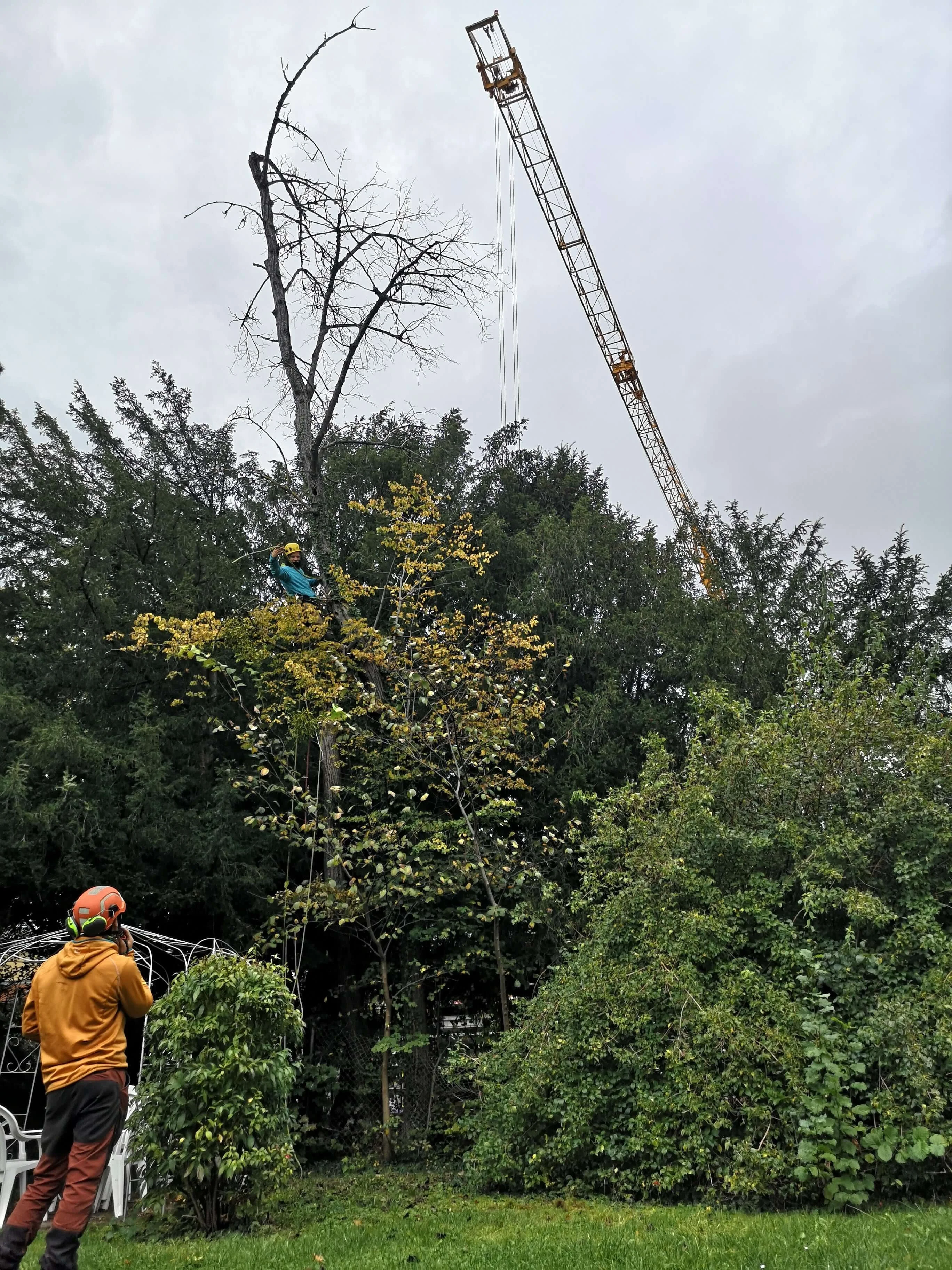
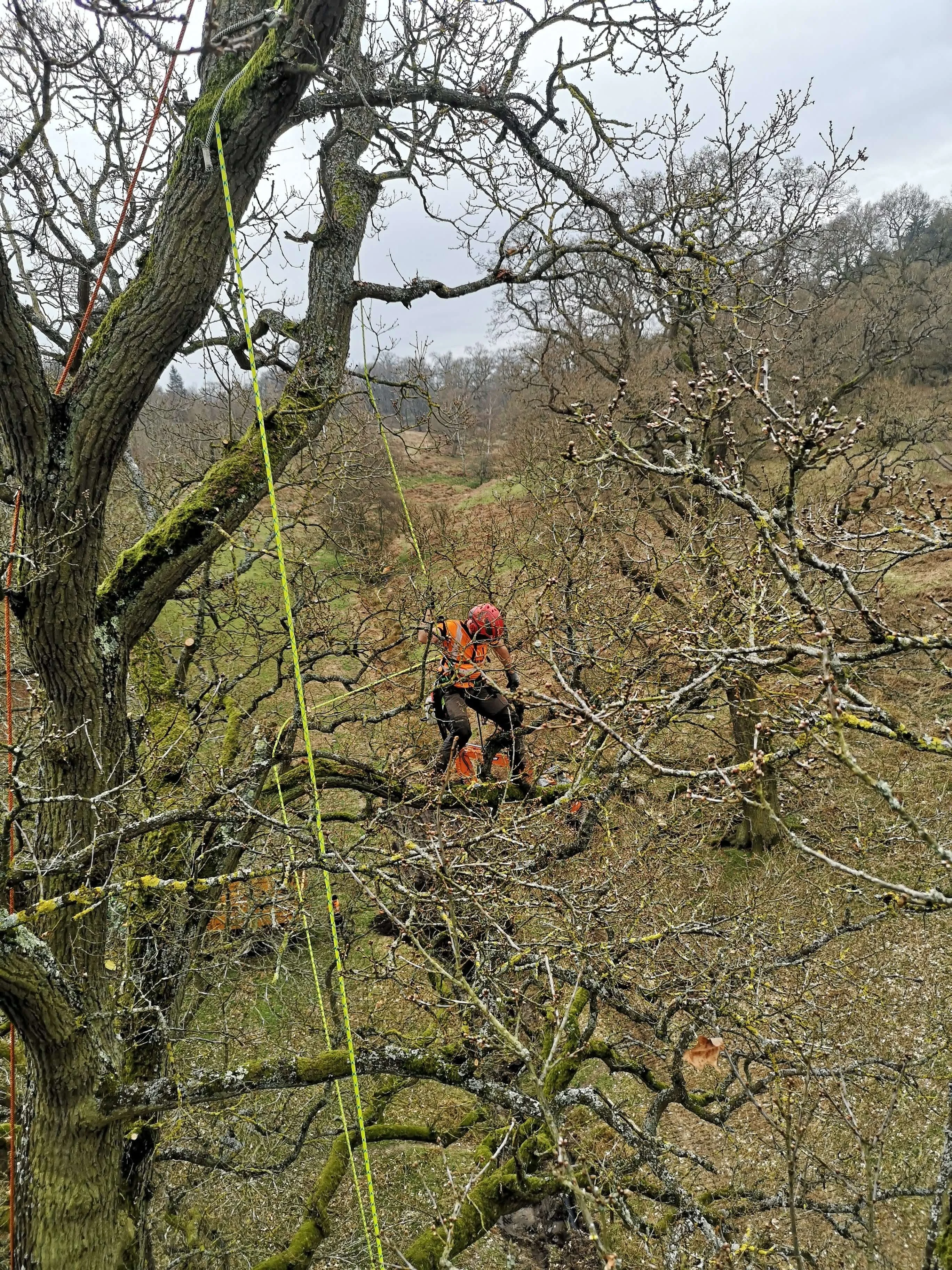
Using tree climbing techniques, it’s possible to reach the affected area, observe the damage directly, and remove the compromised part using methods suited to the tree’s condition and the space below. Where material can’t be dropped freely, branches and sections of wood can be lowered under control using ropes and rigging techniques, reducing the risk of further damage to buildings, fencing, paving, or other structures.
Emergency tree-climbing work
In many emergency situations, using tree climbing makes it possible to quickly reach parts of the crown that are otherwise hard to access. The operator accesses the tree by rope and professional positioning systems and can move towards the damaged areas without necessarily needing aerial platforms.
This can be especially useful when a tree is in a garden with narrow access, when heavy equipment can’t be brought close, or when the damaged branches are high in the crown. The same applies when buildings or other structures are underneath and a specific part of the tree needs to be reached precisely.
The access technique is still chosen based on the situation: a severely damaged tree first needs to be assessed for whether it can be worked on safely at all.
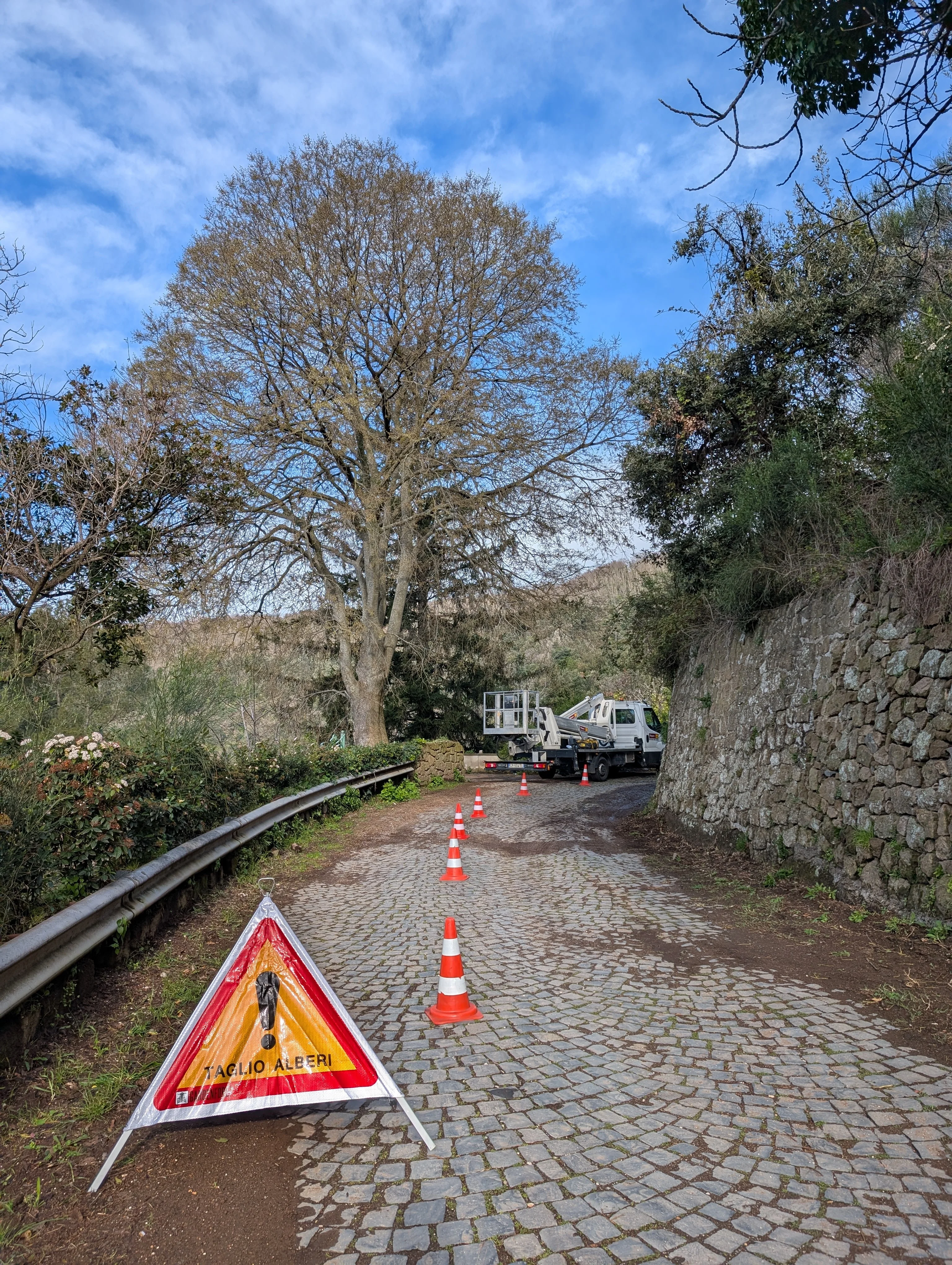
A tree doesn’t always need felling after a storm
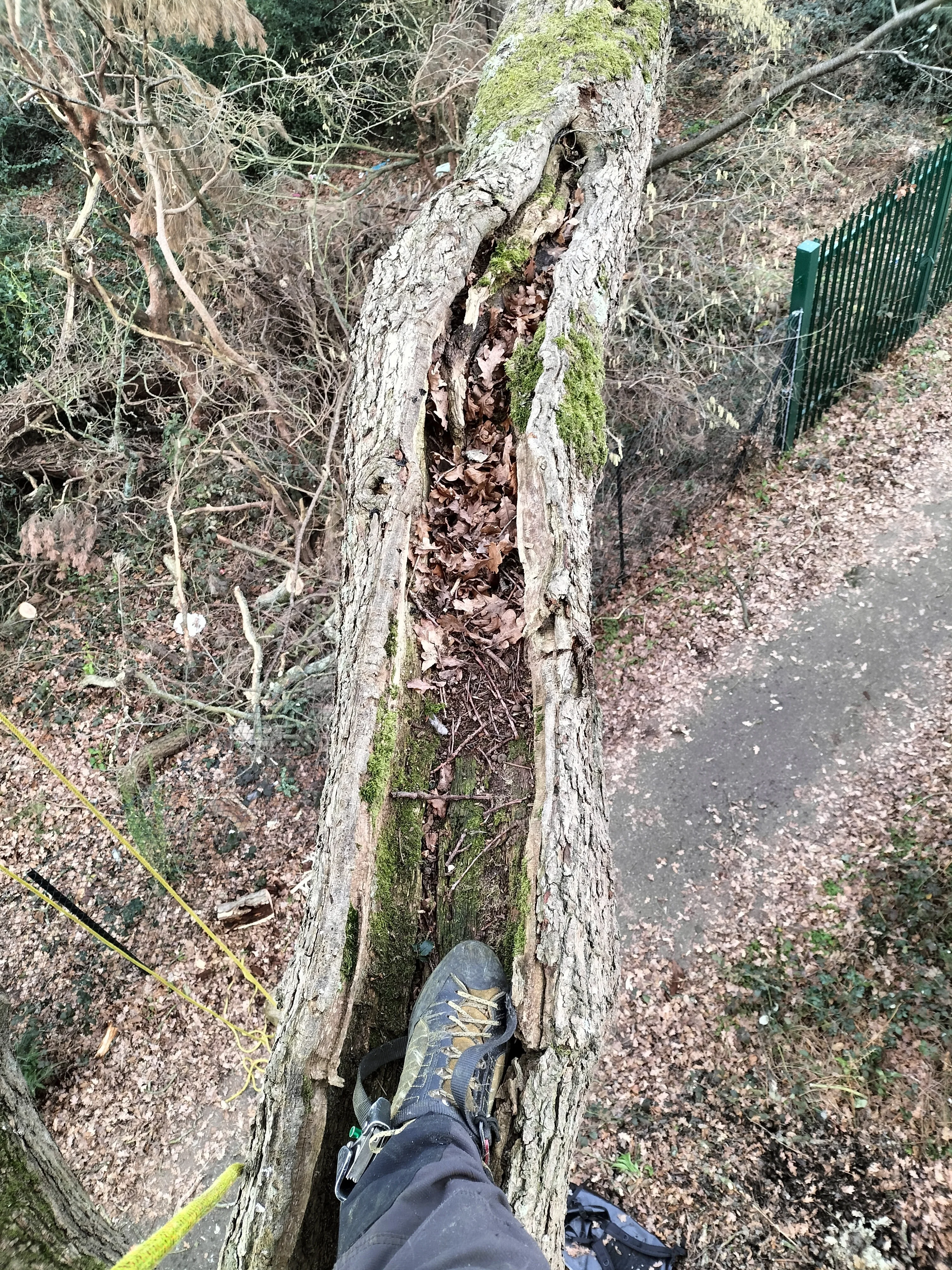
A tree that has lost a major branch can look severely compromised, but visible damage doesn’t automatically mean it needs to be completely removed. In some cases, the remaining structure can be preserved through targeted work and subsequent management. In others, the damage may be extensive enough that a more radical solution is needed.
The decision depends on the extent and location of the damage, the condition of the remaining structure, any pre-existing defects, and the potential consequences of further failure. It’s also necessary to establish whether, after the work, a functional tree structure compatible with its location can still be maintained.
Where conditions allow, Il Tree Climber therefore favours a conservative approach: remove what represents a problem, without automatically sacrificing what can be preserved.
Tree damaged by a storm?
If a tree has lost a branch, is leaning or has branches hanging in the crown, keep people and vehicles away from the area below and send a few photos. The first step is to identify what represents an immediate risk and make it safe; the decision on the rest of the tree comes afterwards.
Contact Il Tree Climber for storm damage or an emergency involving a tree.