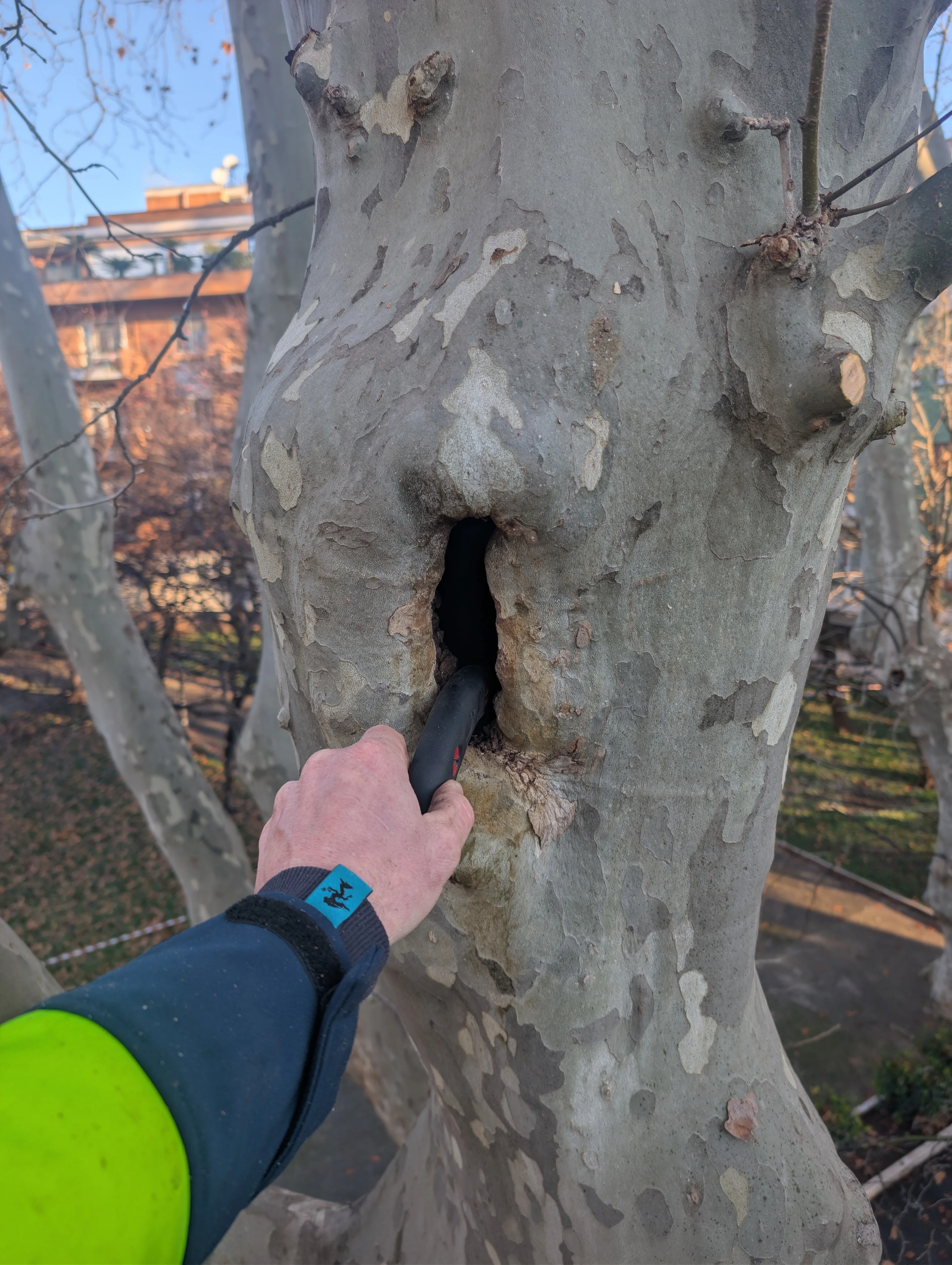
When a tree shows weak growth, thinning crown, abnormal leaves or signs of a pest or disease, the first question isn’t which product to use — it’s what is actually limiting the tree. Endotherapy is one of the tools available once that question has been answered.
Endotherapy means delivering a treatment directly into the tree’s vascular system through small injection points in the trunk, so that the tree itself carries it to where it is needed. Il Tree Climber offers endotherapy as a targeted, low-dispersion alternative to spraying the crown, and only where an assessment shows it is genuinely indicated.
What is endotherapy?
Endotherapy (also called trunk injection) introduces a treatment into the conductive tissues of the trunk. Carried by the sap, it reaches the crown from the inside rather than being sprayed over the foliage from the outside.
Because the product goes into the tree rather than into the air, it can be used in gardens, courtyards, school grounds, streets and other places where people spend time and where spraying a tall crown would be impractical or unwelcome.
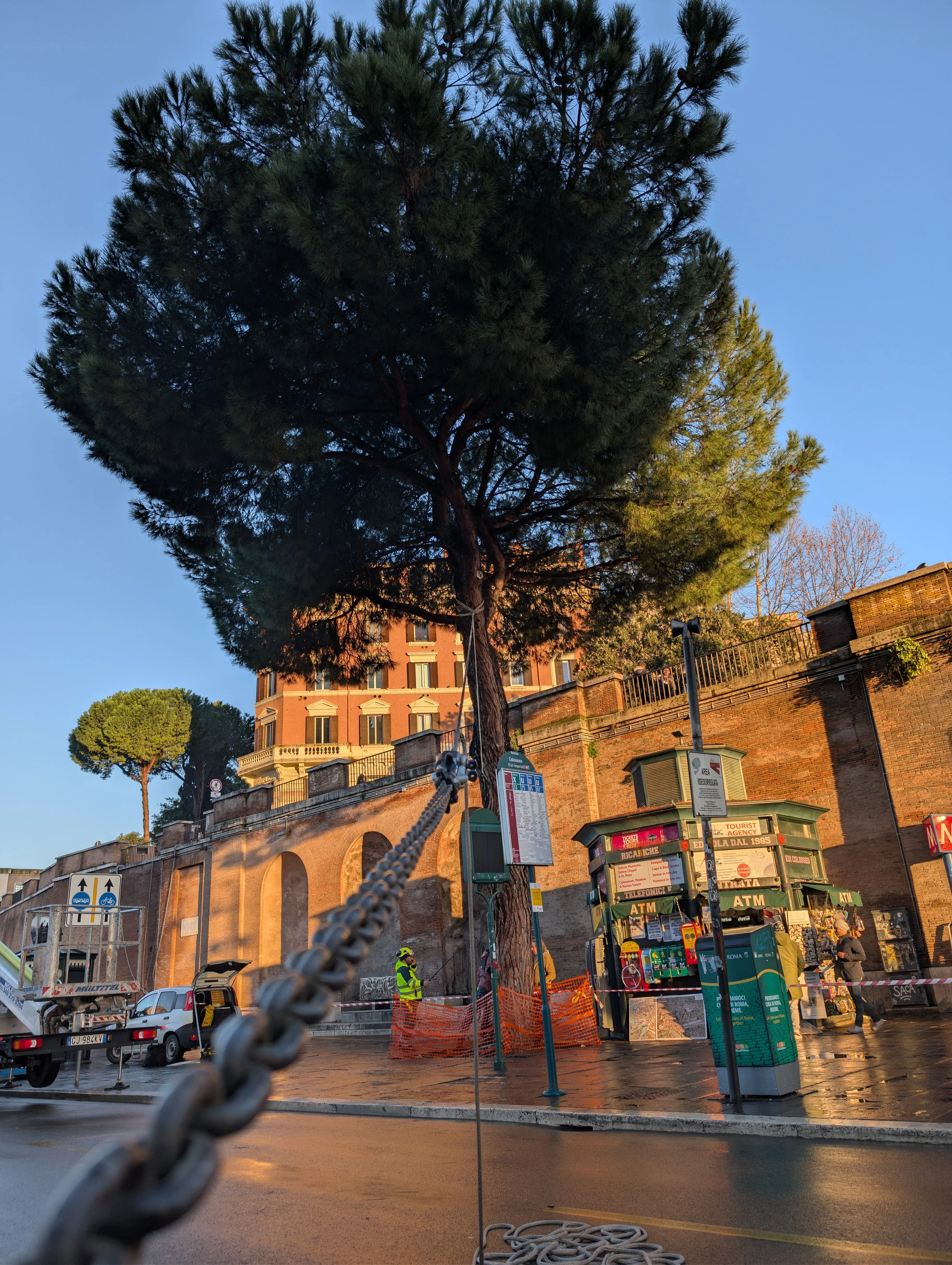
Only authorised products — Vargus
Il Tree Climber uses Vargus, a product authorised by the Italian authorities for use in endotherapy. More generally, only products holding a valid ministerial or EU authorisation for the use in question are ever used, at the doses and in the ways their authorisation allows.
This is a compliance point, not a detail. A treatment injected into a tree in a private garden or a public space has to be one that is legally permitted for that purpose. If a situation calls for something that no authorised product covers, the answer is a different management strategy — not an improvised treatment.
James holds the certification required in Italy for the professional use of plant-protection products.
Every treatment is logged and traceable
Each endotherapy treatment is recorded: the tree, its position, the date, the product used, the quantity and the reason for the treatment. The owner receives a record of what was done.
Traceability matters for three reasons:
- it allows the effect of the treatment to be checked over time
- it makes follow-up treatments, where needed, consistent with what has already been done
- it gives owners, condominium administrators and managers of public spaces documentation they can rely on
When can endotherapy be useful?
Endotherapy may be considered when:
- a specific pest or disease has been identified and an authorised treatment exists for it
- the tree is too tall, or the site too sensitive, for treatment of the crown from outside
- the tree has particular value and it makes sense to protect it over time
- a targeted intervention is preferable to treating the whole surrounding area
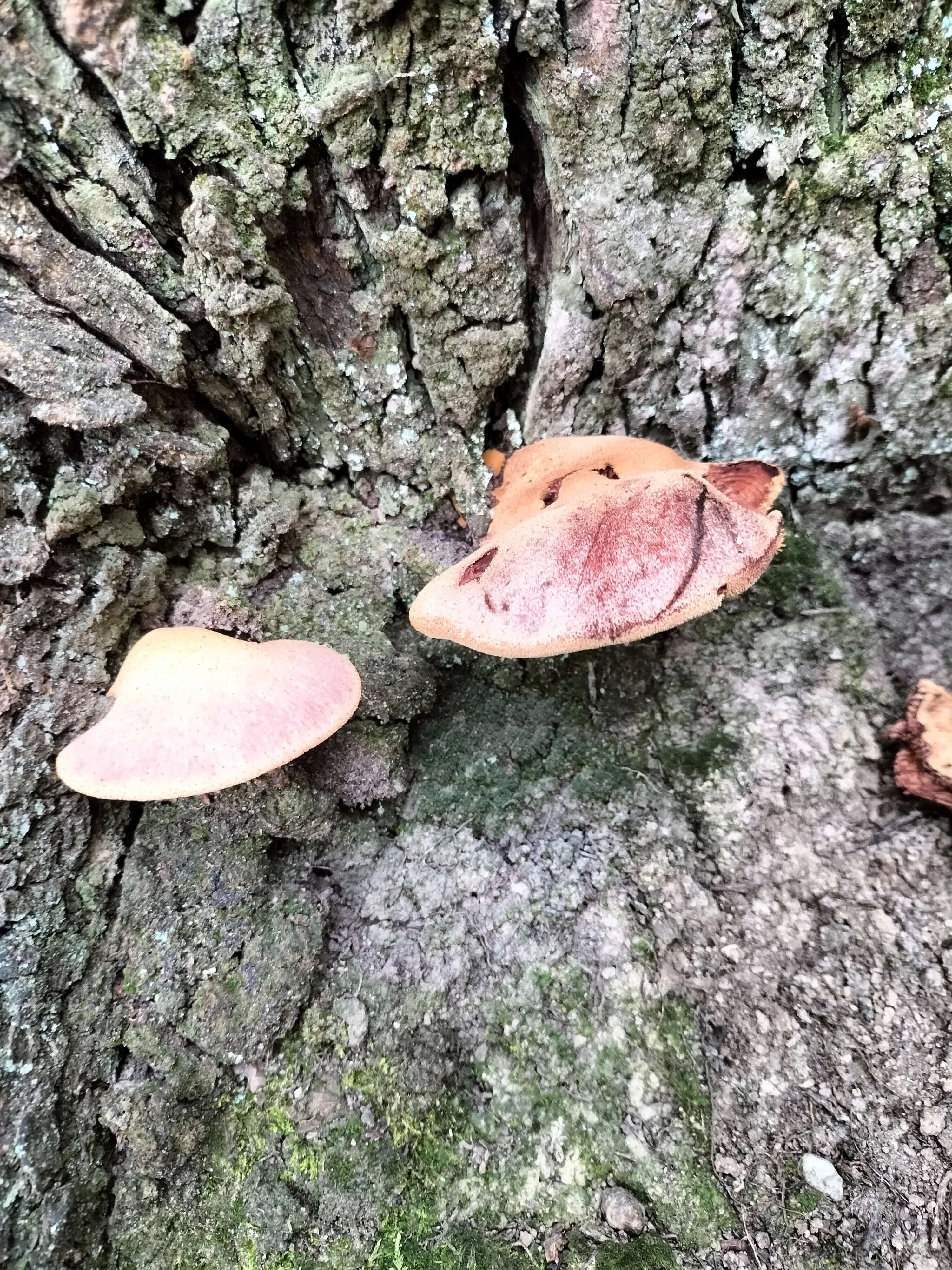
In Rome, trunk injection is often discussed in relation to the pests affecting stone pines and other urban trees. Each case still needs an assessment: the same symptoms can have different causes, and not every problem is solved by a treatment.
Endotherapy is part of looking after the whole tree
A tree’s health also depends on the soil its roots grow in, on water, on the space available and on the stresses it is exposed to. Compacted soil, construction work near the roots, drought or waterlogging, and past heavy pruning can all leave a tree more vulnerable.
For this reason endotherapy is never offered on its own as a routine “cure”. It sits alongside other measures where these are appropriate:
- improving soil and root-zone conditions, including correct mulching
- managing water stress
- selective pruning that doesn’t add further stress
- protecting roots during building work
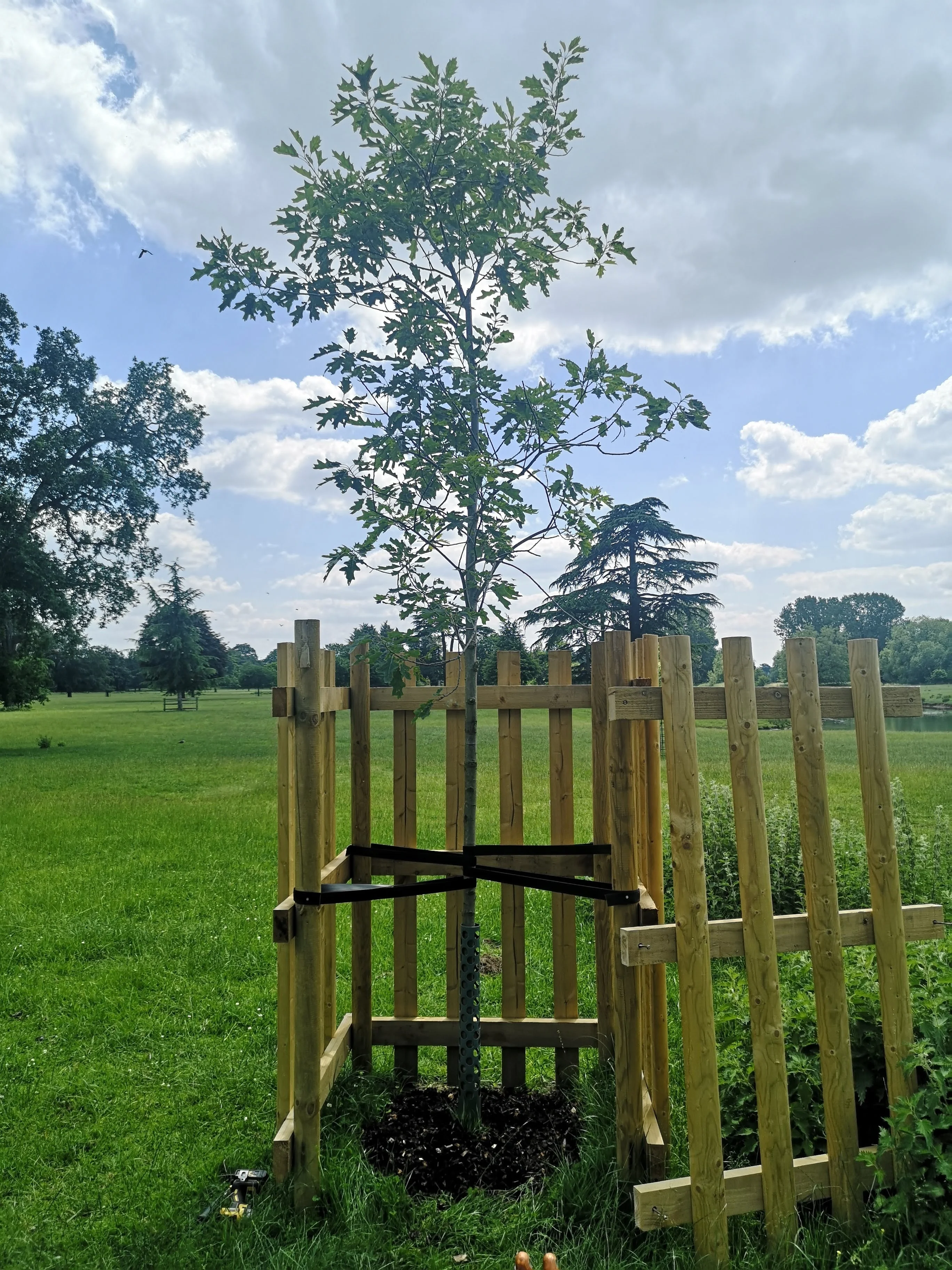
- monitoring the tree’s response over the following seasons
How a treatment is carried out
Each job follows the same sequence:
- assessment of the tree, its symptoms and its surroundings, to confirm that a treatment is justified
- choice of an authorised product suitable for the situation
- injection through a small number of points in the trunk, sized to the tree
- record of the treatment, given to the owner
- follow-up checks to see how the tree responds
How much does endotherapy cost?
The cost depends on the size of the tree, which relates to the quantity of product needed, on the number of trees, on accessibility and on whether follow-up treatments are required. An assessment of the tree comes first — sometimes it shows that a treatment isn’t the right answer.
Is your tree struggling?
If you have noticed a thinning crown, abnormal leaves, dieback or signs of a pest, a first assessment can establish what is going on and whether endotherapy, another measure or simply monitoring is the most appropriate response.
Contact Il Tree Climber for an assessment of the tree’s condition.