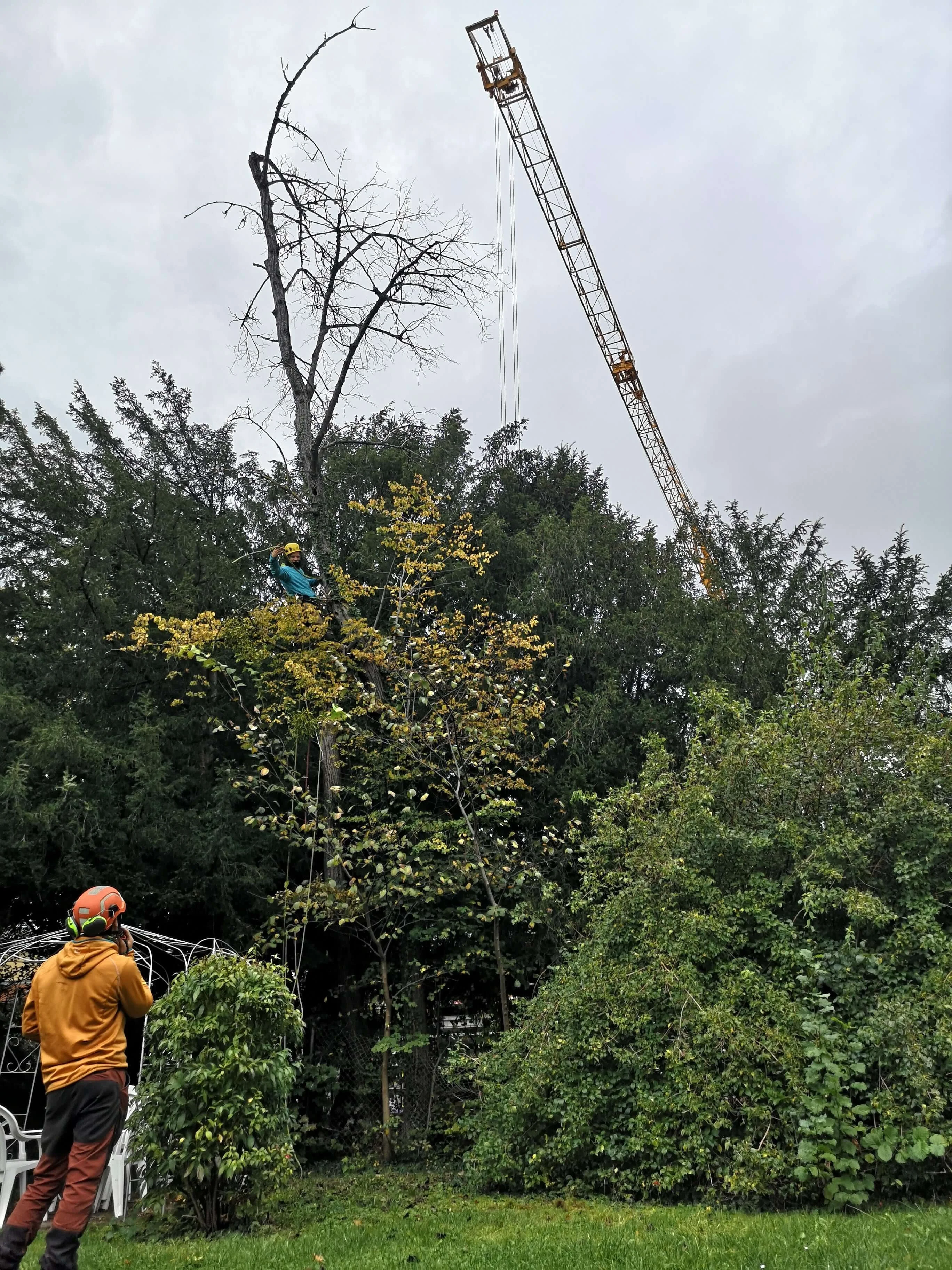
Removing a tree is a significant intervention and, where possible, should only be considered after assessing the alternatives available.
There are situations, however, where felling a tree becomes necessary: compromised structural condition, significant damage, interference with buildings or infrastructure that can’t be managed, or changes to a space that don’t allow the tree to be kept.
Il Tree Climber carries out tree felling and removal, including of large, tall trees, using tree climbing, controlled dismantling, and rigging techniques where the site doesn’t allow for conventional felling.
The goal is to plan every stage of the work to minimise impact on the surrounding environment, protecting buildings, paving, fencing, gardens, and other structures.
When might felling a tree be necessary?
There’s no single condition that automatically makes felling necessary. The decision needs to take into account the tree’s characteristics, its position, any existing weaknesses, and the realistic options for managing it.
Removal may be considered, for example, when:
- the tree has very significant structural damage, or a major part of its structure has been compromised
- the tree is dead and its presence isn’t compatible with the surrounding context
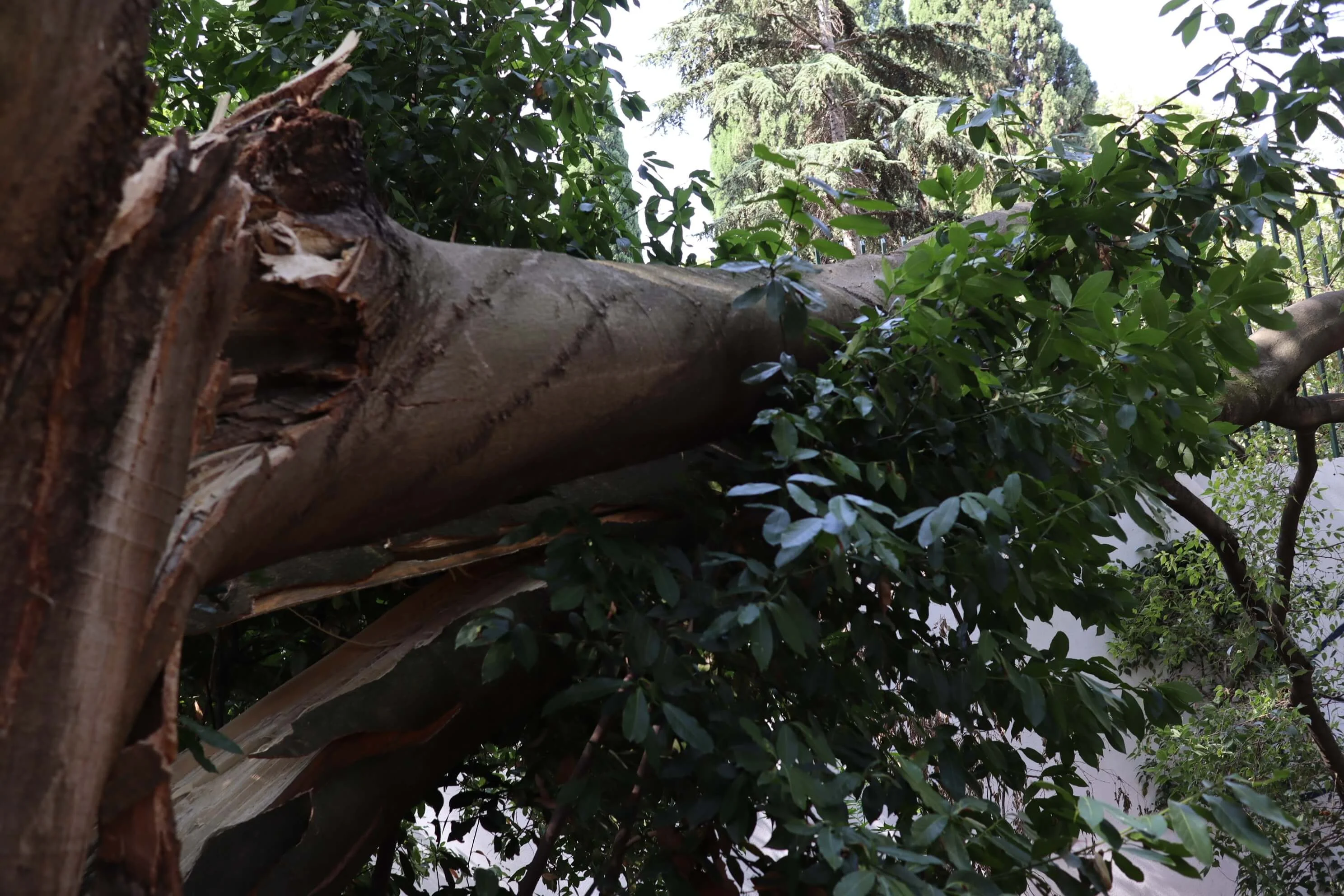
- it has suffered serious damage from wind, storms, or other events
- its condition doesn’t allow for reasonable management through pruning, consolidation, or monitoring
- its position creates interference that can’t be resolved with less invasive work
- a fallen or partially failed tree needs to be removed
Where reasonable, technically appropriate alternatives exist, it may be possible to fully or partially preserve the tree.
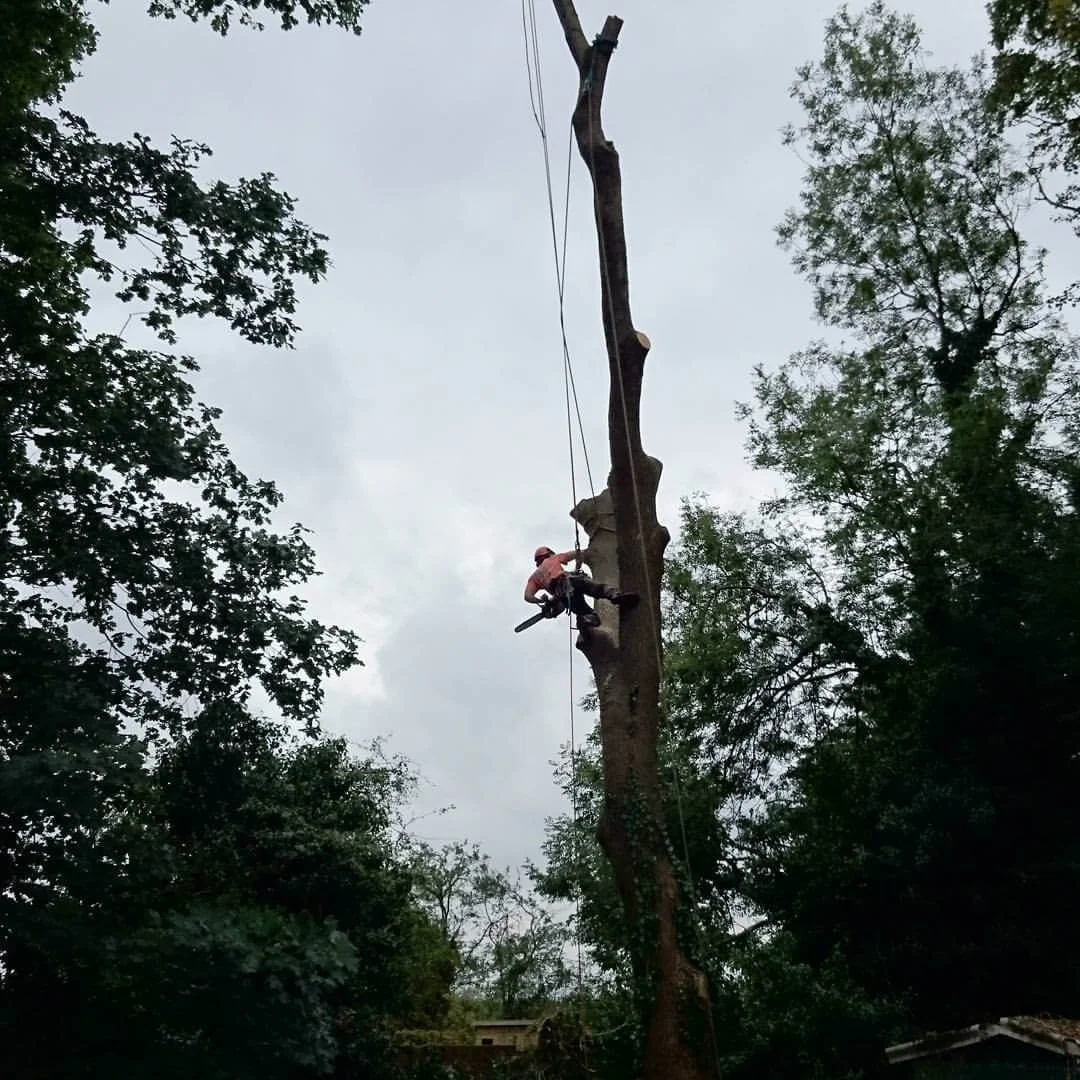
Felling tall trees
Felling a tall tree can become particularly complex when the specimen is in a garden, a courtyard, or close to buildings. In many cases, there isn’t enough space to fell the tree in one direction in a single piece.
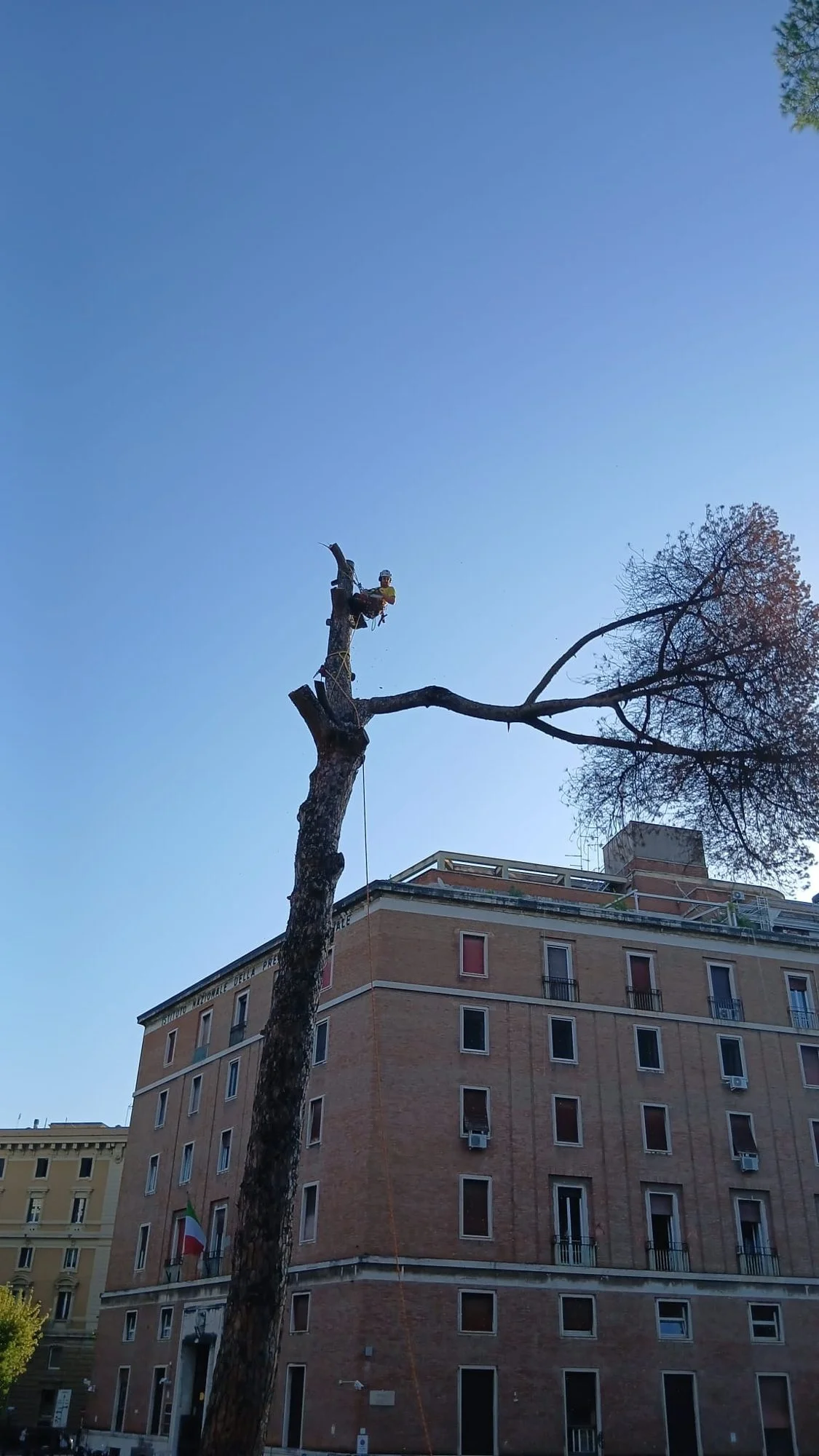
This requires a progressive dismantling process, starting with the crown and gradually removing branches and sections of the trunk. This approach allows work even on large trees in confined spaces, progressively controlling the size and movement of the material being removed. The technique used always depends on the tree’s characteristics and its surroundings.
Controlled felling by tree climbing
When access with platforms or mechanical equipment is difficult, Il Tree Climber can carry out dismantling using tree climbing techniques. The operator accesses the tree using ropes and professional positioning systems, progressively reaching the different parts of the crown and removing them.
Controlled felling by tree climbing is particularly useful when a tree is close to a house, within a courtyard, in a garden with narrow access, or near walls, fences, paving, and other structures that need protecting. It can also be an effective solution when it isn’t easy to bring an aerial platform or other mechanical equipment close to the base of the tree.
Tree climbing is an access technique — how the tree is subsequently dismantled depends on the available space, branch size, and the specific conditions of the job.
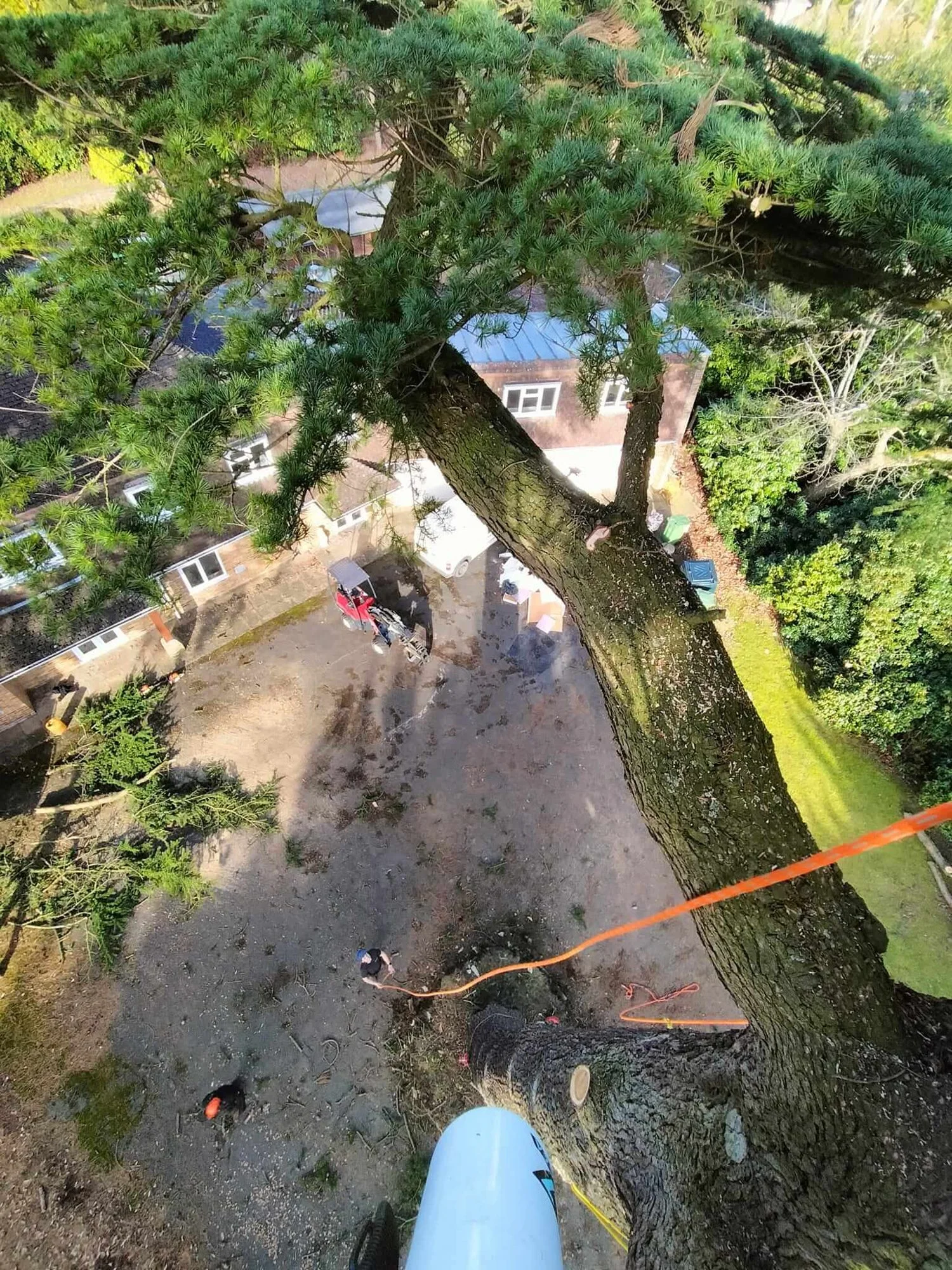
Dismantling and rigging: controlling the descent of branches and trunk sections
Cut material can’t always be allowed to fall freely. When buildings, roofs, paving, fencing, plants, or other elements below need protecting, rigging techniques may be necessary.
Using ropes, pulleys, and specific handling systems, the descent of branches and trunk sections can be controlled, progressively transferring material from the crown to the ground. This allows dismantling to be carried out piece by piece, adapting the size and method of descent to the characteristics of the available space.
The goal isn’t just to fell the tree, but to do so while limiting impact on structures and the surrounding area as much as possible.
Felling pines
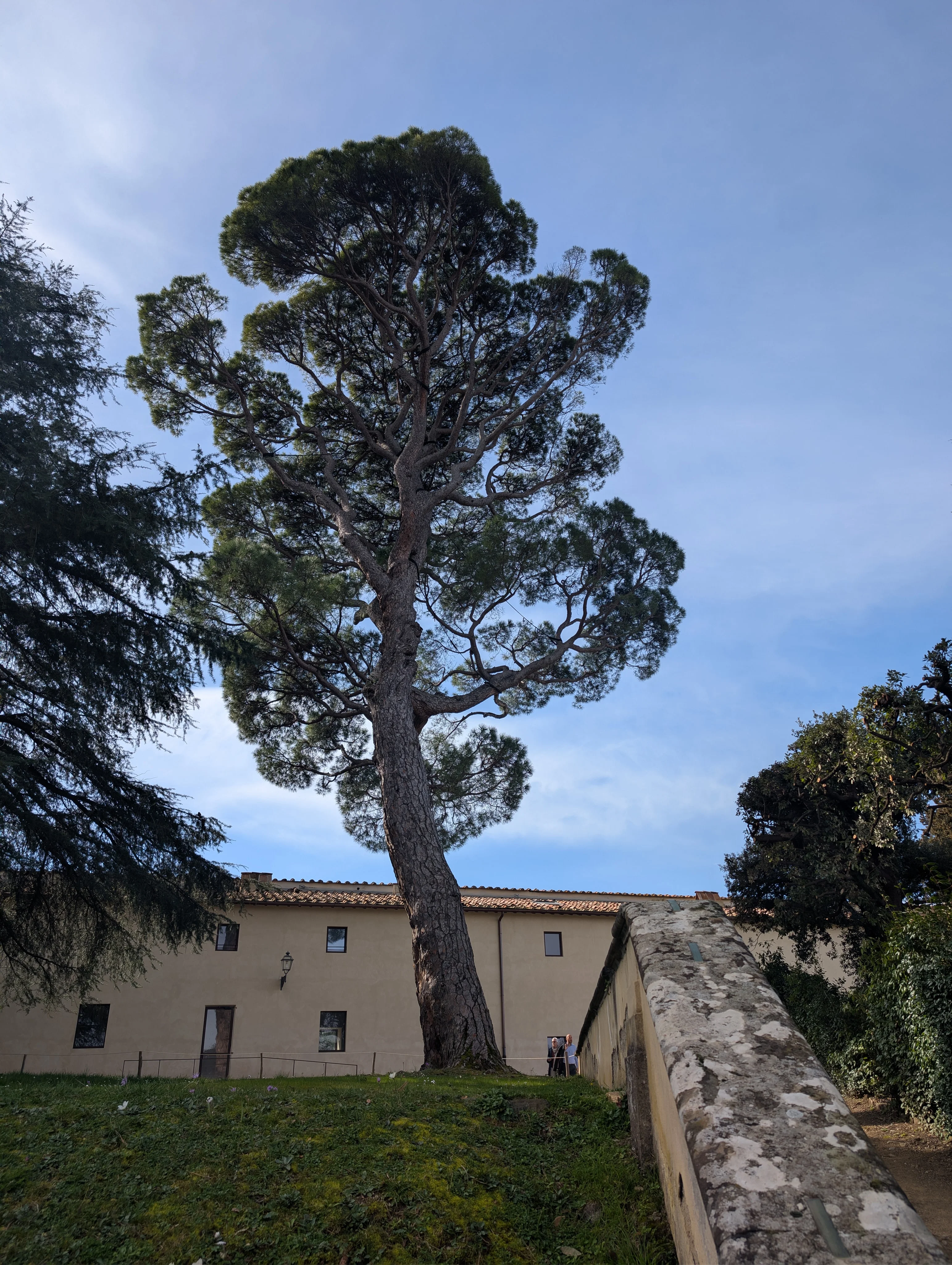
Pines can reach considerable height and size, and — particularly in urban or residential settings — their removal can require especially careful planning. Establishing how to carry out the felling of a pine requires considering not just the height and diameter of the trunk, but also the crown’s size and distribution, and the tree’s lean and structural condition.
The space available around the tree, the presence of buildings or other structures, access for equipment, and how branches, trunk, and other material will be handled and managed are equally important. A pine in a large open space can therefore be managed very differently from a specimen of the same height positioned between a house, a fence, and a neighbouring garden. For this reason, height and species alone aren’t enough to establish the method or cost of the work.
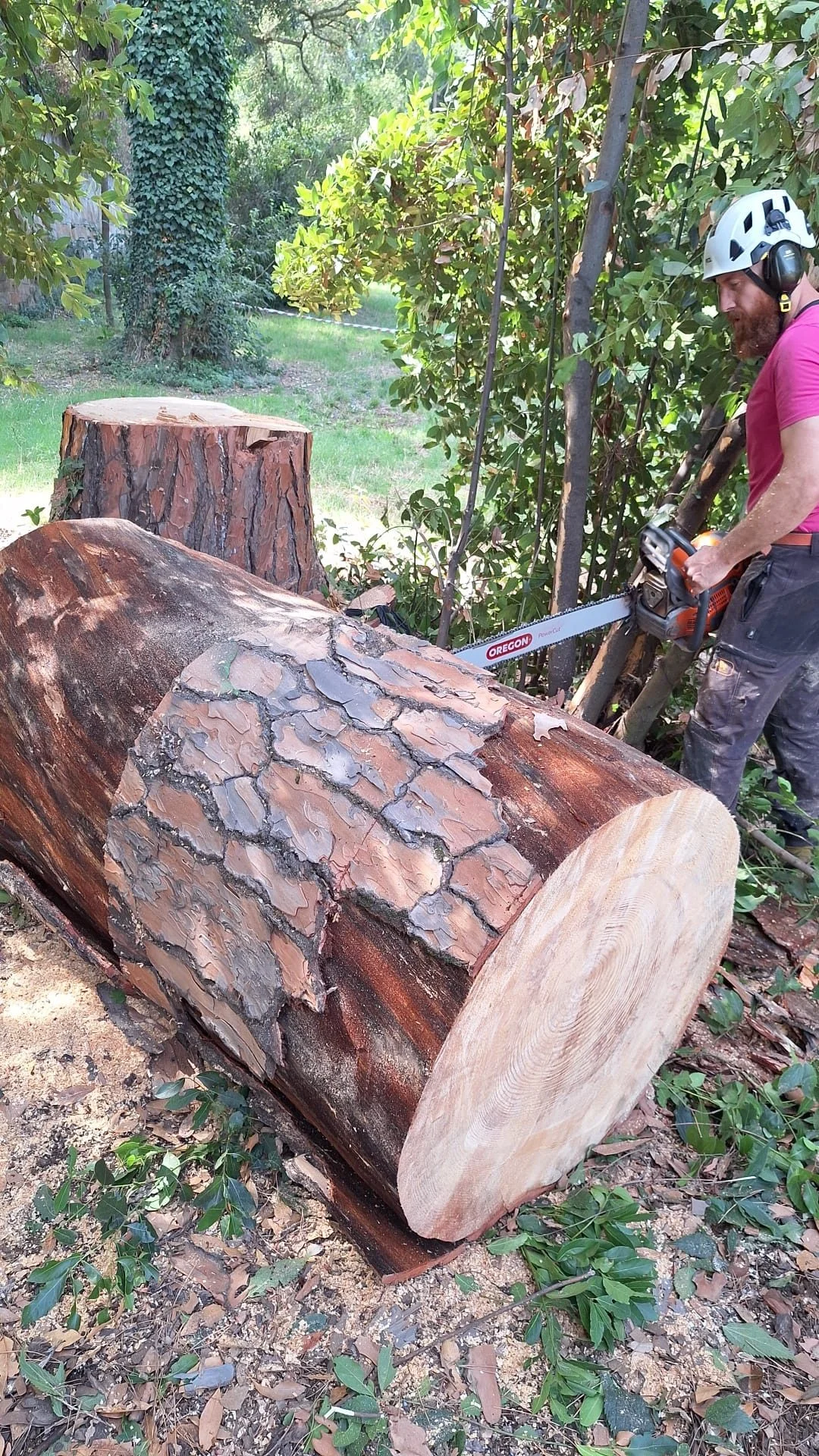
Removing everything isn’t always the only solution
Where the tree’s and the site’s conditions allow, complete removal isn’t necessarily the only option. In some cases, alternative solutions can be considered, such as:
- preserving part of the tree, or progressively reducing the structure
- keeping part of the trunk in place and creating a monolith
- preserving deadwood in a condition compatible with safety
- using part of the material as habitat within the area
These possibilities need to be assessed case by case and aren’t appropriate in every context. A busy garden, for example, may have different requirements to a large park or a natural area.
Il Tree Climber’s approach is therefore to assess how much of the tree genuinely needs to be removed, avoiding treating complete felling as an automatic default wherever possible.
Monoliths and preserving deadwood
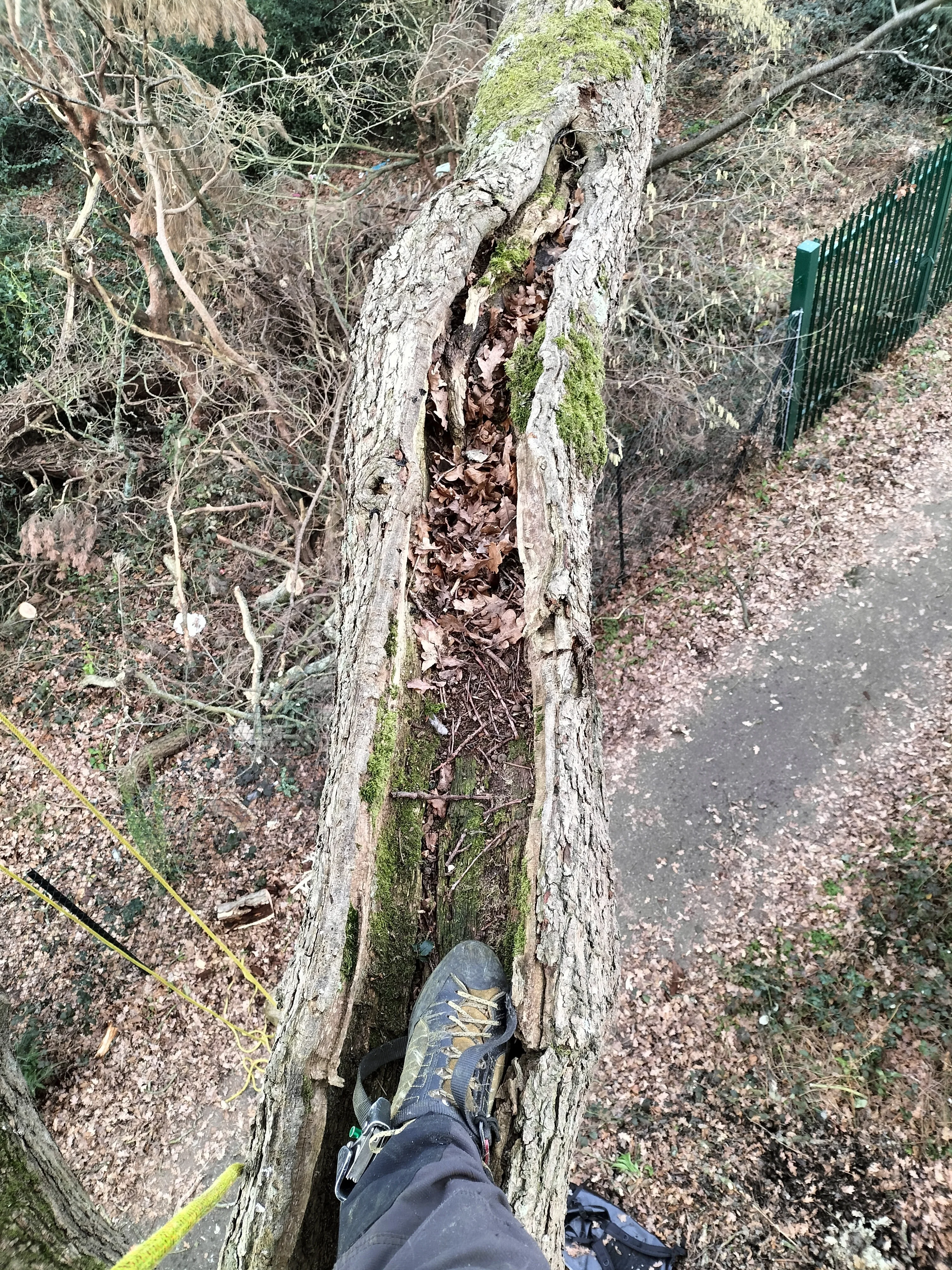
In certain conditions, rather than removing a tree entirely, part of it can be preserved as a monolith — a section of trunk left standing and appropriately managed. Deadwood can provide an important habitat for many organisms and continue to serve an ecological function even after the tree’s death.
Whether a monolith can be kept depends on the context. The remaining structure, site characteristics, the presence of people and property, and the consequences of any future failure all need to be considered. Where compatible with how the area is managed, this solution allows part of the tree’s ecological value to be preserved rather than eliminating the structure entirely, and in some cases can reduce the amount of material that needs to be cut, moved, and taken away.

Can the wood stay on site?
Not all material from felling needs to be taken away. Where space and the client’s needs allow, some sections of trunk or branch can be kept on the property as deadwood on the ground or habitat features. This has two potential benefits: preserving some of the material’s ecological function, and reducing the amount of wood that needs to be transported and disposed of. This choice naturally needs to be compatible with how the garden or area is used, and with safety requirements.
How much does it cost to fell a tree?
The cost of felling a tree can vary considerably. Price doesn’t depend on height alone, but on the overall complexity of the job. Key factors include:
- height, trunk diameter, crown size, species, and structural condition of the tree
- available space and site accessibility
- presence of buildings, fencing, or other structures to protect
- whether the tree can be felled directly or needs controlled dismantling
- whether rigging techniques are needed
- the quantity, size, and handling of the resulting material
A large tree in an open space isn’t necessarily more complex to remove than a smaller tree in a courtyard with very little working room. This is why it’s necessary to understand both the tree and the context it’s in before the cost of felling can be properly defined.
How much does it cost to fell a pine?
The cost of felling a pine also depends on the specific conditions of the job. Two pines of the same height can have very different removal costs if one is in a large open plot and the other is next to a house, on top of a wall, or in a garden with no vehicle access. Whether direct felling is possible, or controlled dismantling and rigging are needed, has a particular effect on cost. An assessment of the tree and some information about the surrounding space make it possible to define the work required and provide a quote.
A felling process planned from the top down
In more complex jobs, every stage is planned around what will happen to each part of the tree after it’s cut. Piece size, anchor points, the trajectory of descent, and the space available on the ground all need to be considered before starting. This approach makes it possible to tackle the removal of large trees in difficult settings, progressively reducing the structure down to the trunk and working according to the specific characteristics of the site.
Need a tree felled or removed?
If you have a tree that needs removing, even a large one or in a complex space, the most appropriate method of work can be assessed. Where reasonable alternatives to complete removal exist, conservative solutions or preserving part of the wood as habitat can also be considered. Where felling is necessary, the goal is to plan and carry it out with as much control over the job as possible.
Before felling, also check whether you need permits or authorisation.
Contact Il Tree Climber for an assessment and a quote for tree felling.