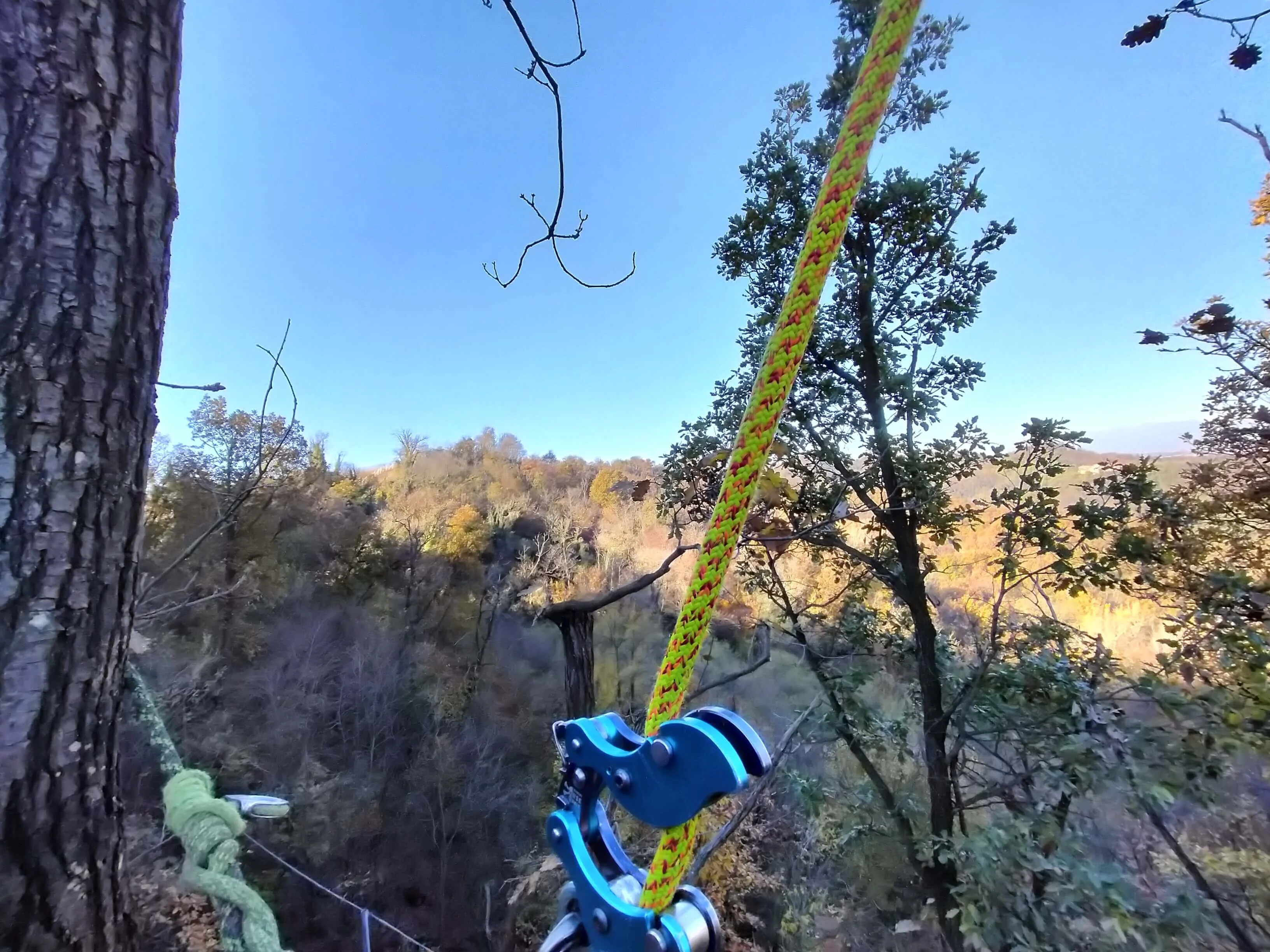
When a drone gets stuck in a tree, the instinct is often to try and get it down as quickly as possible. In many cases, though, the tree is too tall, the drone is out of reach, or the branches around it make any DIY attempt risky both for the person and for the equipment.
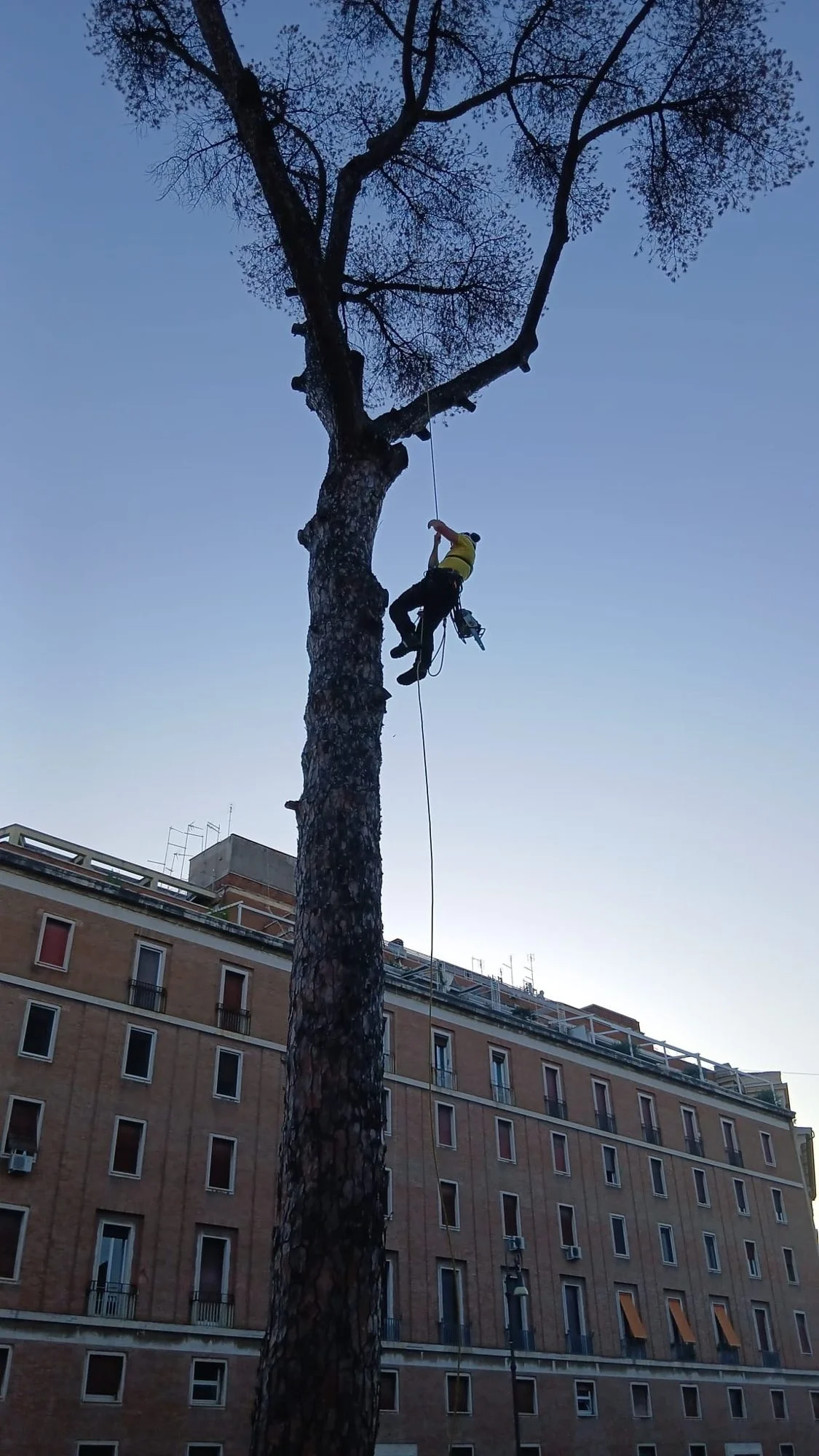
Il Tree Climber recovers drones and other equipment stuck in trees, using tree climbing techniques to reach the device directly, without necessarily needing an aerial platform.
Why avoid an improvised recovery
When a drone is clearly visible, the temptation to try to recover it yourself is understandable. The problem is that climbing a tree without training and safety systems carries a significant risk of falling. Even using a ladder propped against branches, shaking the crown, or throwing objects at the drone can make the situation more dangerous.
What’s more, simply managing to knock the device down doesn’t mean recovering it intact — a fall from several metres can cause far more damage than the initial impact with the tree.
Where possible, Il Tree Climber reaches the device directly and recovers it by hand, or controls its descent to the ground.
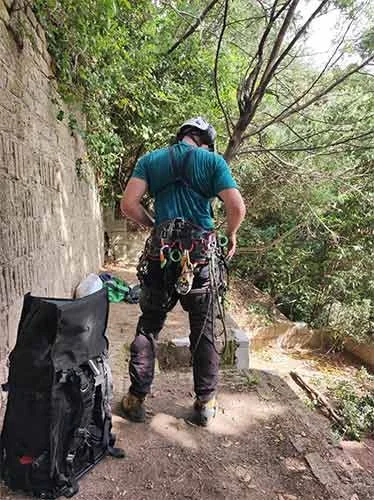
Recovering a drone without damaging it
Every job is organised around the position the drone is stuck in. If it can be reached directly, the aim is to secure it before starting the descent. Where the position is more complex, systems can be used to move it without letting it fall freely.
Particular care is taken with valuable drones, cameras, and other electronic equipment that could be damaged by impacts or falls. The goal isn’t simply to “get the drone down,” but to recover it in the best possible condition.
Not just drones
The same access techniques can be used to reach other objects stuck in a crown — cameras, action cams, sensors, monitoring equipment, or other valuable devices, for example. Whether recovery is possible depends on the object’s position, the tree’s condition, and whether it can be safely reached.
Accessing the crown by tree climbing
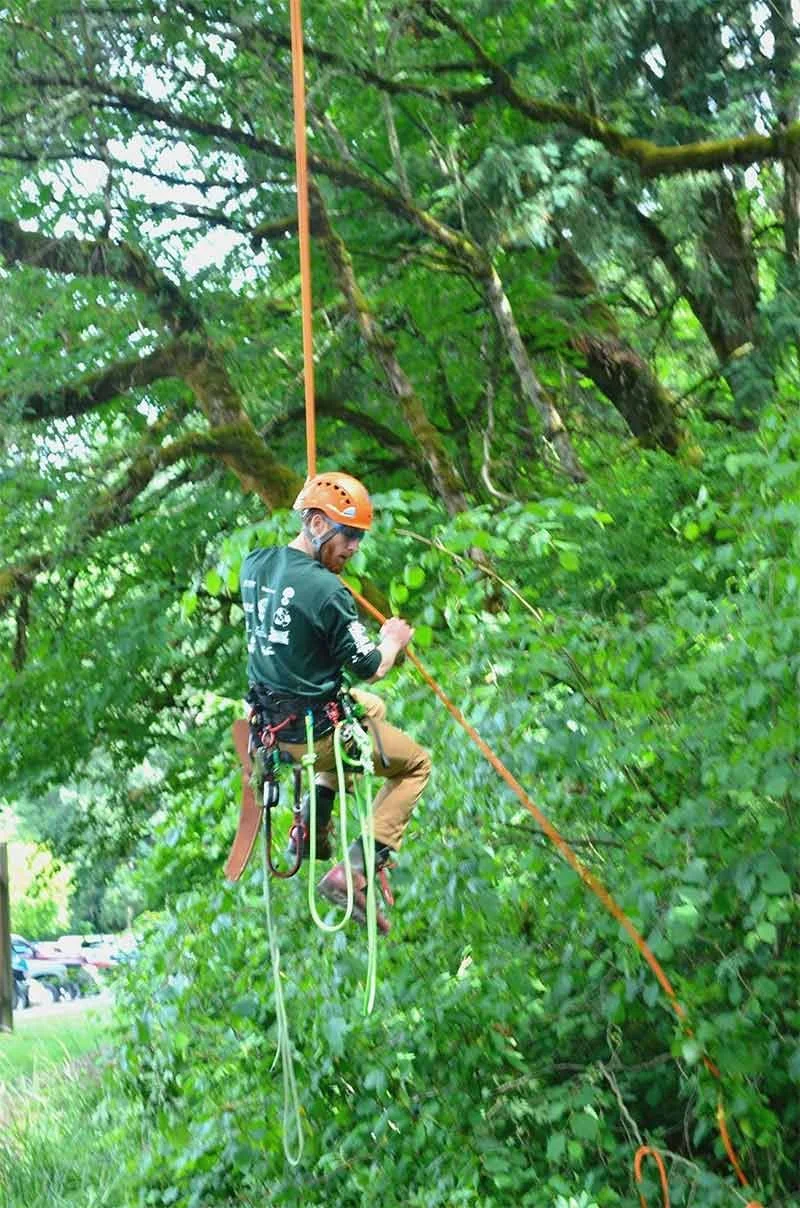
Tree climbing allows access and movement through the crown using ropes and professional positioning systems. This technique is particularly useful when a tree is in a garden with narrow access, in a courtyard, or somewhere an aerial platform would be difficult or impractical to use. The operator can progressively climb the tree’s structure and reach the area involved without necessarily needing to bring heavy equipment to the base of the tree.
Tree climbing isn’t automatically usable in every situation, though — the tree’s condition and the availability of suitable anchor points need to be assessed before accessing it.
Access for installations and checks at height
Crown access can also be useful when there’s no object to recover. Some projects may require reaching a specific part of a tree to install, check, replace, or remove equipment. Il Tree Climber can therefore provide technical rope access at height for sensors, cameras, monitoring instruments, or other equipment mounted on trees. Where the work requires expertise from another discipline, access can be carried out in collaboration with the technician or specialist responsible for the equipment.
Recovering drones from very tall trees
Height is often the first difficulty a drone owner notices, but it isn’t the only factor affecting complexity. The tree’s height, crown shape, the drone’s distance from the trunk, branch size, the tree’s condition, and the space available on the ground all need to be considered together. This is why two drones stuck at the same height can require completely different recovery approaches. Where conditions allow, tree climbing still makes it possible to reach even the highest parts of the crown without necessarily needing an aerial platform.
Is it always possible to recover a drone?
No. Safety of the job comes first. A badly damaged tree, a position that can’t be adequately reached, unfavourable weather, or the presence of hazardous infrastructure can mean the job needs to be postponed or a different solution used.
A particular case involves drones stuck in trees near power lines. In this situation, no attempt should be made to recover the drone independently — keep your distance and raise the issue with the network operator or other responsible parties.
Cats and other animals stuck in trees
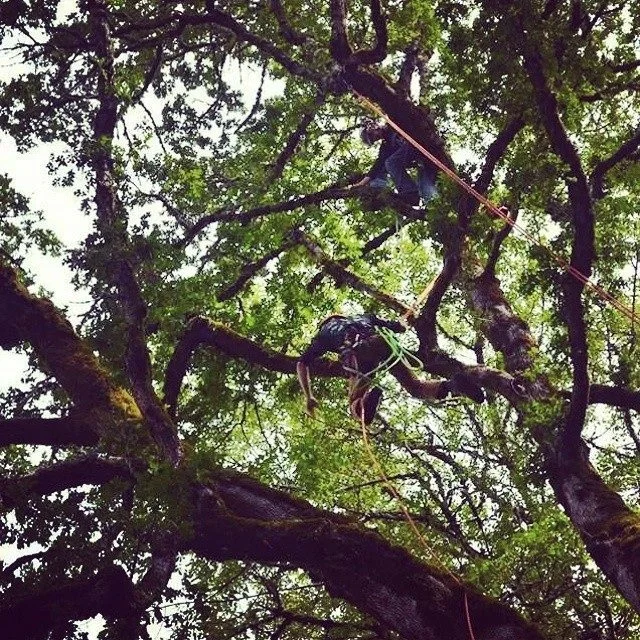
The same rope-access skills are used to help animals that have climbed higher than they can come down from — most often cats. Many cats do find their own way down after a while, but some stay stuck for a long time, particularly high in a tall tree or on thin, outer branches.
If an animal is stuck:
- keep other people, dogs and noise away from the base of the tree
- don’t try to climb up with a ladder or shake the branches — a frightened animal may jump or climb higher
- leave food at the base and give it some time
- if it is still stuck, send photos of the tree and of where the animal is
When we climb up, we approach slowly and calmly and bring the animal down in a secure carrier or bag. It helps if the owner is present and brings the animal’s own carrier.
We don’t offer a veterinary service: if the animal appears injured, contact a vet as soon as it is back on the ground.
How much does it cost to recover a drone from a tree?
The cost of drone recovery depends mainly on how complex the access is. There’s no price set by height alone. The drone’s position in the crown, the tree’s size and structure, how easily it can be reached, and whether the device’s descent needs to be secured and controlled all affect cost.
A drone in the inner part of the crown may require relatively simple work, while a device wedged high up at the end of a branch can make recovery more complex.
For an initial assessment, the following are particularly useful:
- a photo of the whole tree
- a photo of the drone or the area it’s in
- an approximate indication of the height
- some images of the space around the tree
This information helps build a clearer picture of the situation and assess how the job should be approached.
Recovering equipment with minimum impact on the tree
A drone caught in the branches shouldn’t automatically become a reason to prune the tree. Where possible, rope access allows the device to be reached without unnecessary cuts. If the object’s position makes it necessary to work on the vegetation, this is assessed with the tree’s wellbeing in mind. The same principle used in other arboriculture work applies here too: do only what’s necessary to achieve the goal.
Got a drone, equipment or an animal stuck in a tree?
If a drone, camera, or other equipment is stuck in a crown, avoid climbing the tree yourself or using improvised systems to reach it. Sending a few photos of the tree and the device’s position allows for an initial assessment and helps establish whether rope-access recovery is possible.
Contact Il Tree Climber to request recovery of a drone or equipment stuck in a tree.