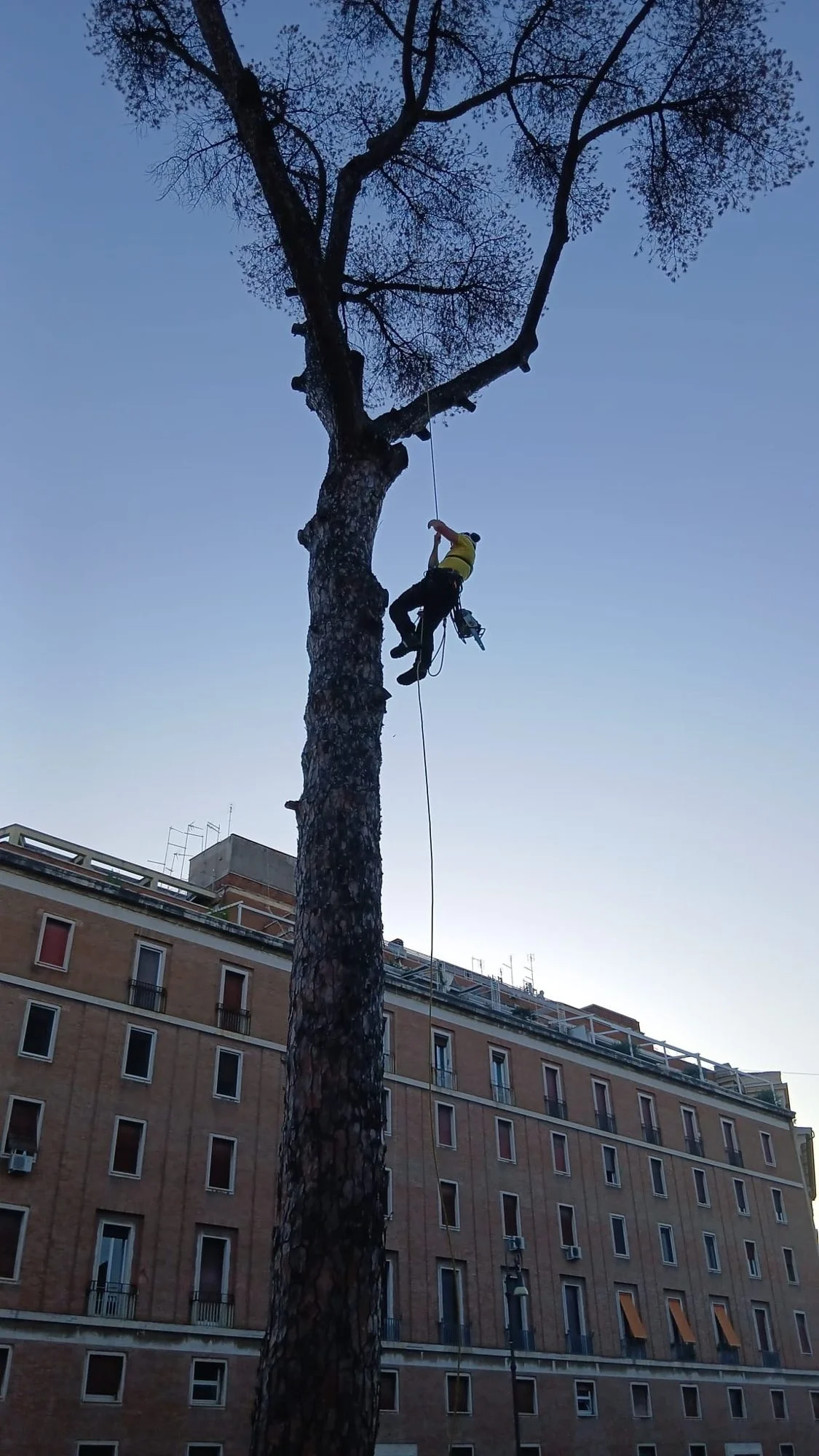
Pruning a tree isn’t simply a matter of shortening or removing branches. Correct pruning requires understanding how the crown is structured, how loads are distributed, and how the tree will respond to cuts over time.
Il Tree Climber carries out tree pruning, including on large, tall specimens, with a targeted and conservative approach.
The goal is to intervene only where necessary, preserving the tree’s natural form as far as possible, improving its structural balance, and reducing conditions that could lead to branch failure or other problems in future.
Good pruning should help a tree keep growing healthily, not force it to constantly react to excessive cuts.
Why prune a tree?
There are several reasons crown work may be necessary. Pruning can help to:
- improve the crown’s structure and balance
- reduce excessive loads on certain branches
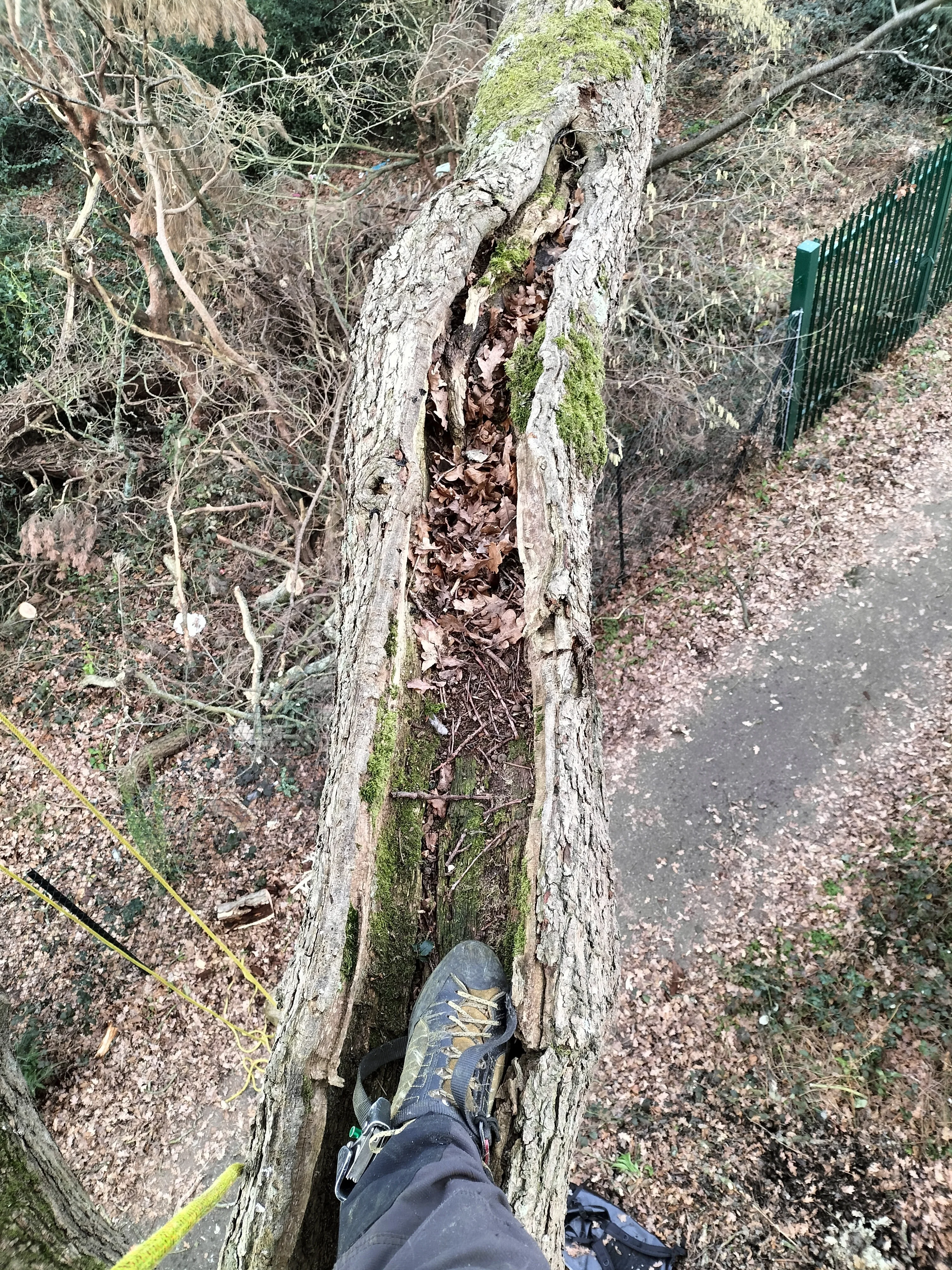
- remove damaged or structurally weak branches
- manage interference with buildings, roofs, roads, or other structures
- correct, where possible, unbalanced growth
- support the growth of young trees
- maintain mature trees of particular value over time
Before deciding how much and where to cut, it’s important to assess the tree as a whole. Not every tree needs the same pruning, and a large tree doesn’t necessarily need to be drastically reduced.
Prune less, prune better
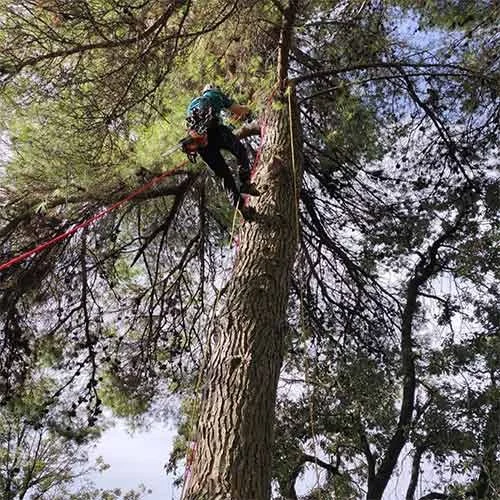
Overly intensive pruning can weaken a tree rather than improve its condition. Removing too much of the crown reduces the leaf surface available for photosynthesis and can trigger a strong vegetative response, producing numerous new shoots — which can sometimes attach less favourably than the original structure.
For this reason, Il Tree Climber favours selective, proportionate, and technically justified cuts, avoiding drastic intervention when it isn’t genuinely necessary. The goal isn’t to make a tree artificially smaller, but to find the best possible balance between health, structure, available space, and the safety of the surrounding area.
Pruning tall trees
Large trees require particular attention. Pruning tall trees means considering not just height, but also branch distribution, the tree’s position, and what lies beneath and around the crown. Gardens, courtyards, homes, fences, roads, or other structures can make it necessary to carefully plan every stage of the work.
Where possible, direct access into the crown allows selective work even on the tallest trees, reaching exactly the parts that genuinely need pruning.
Pruning by tree climbing
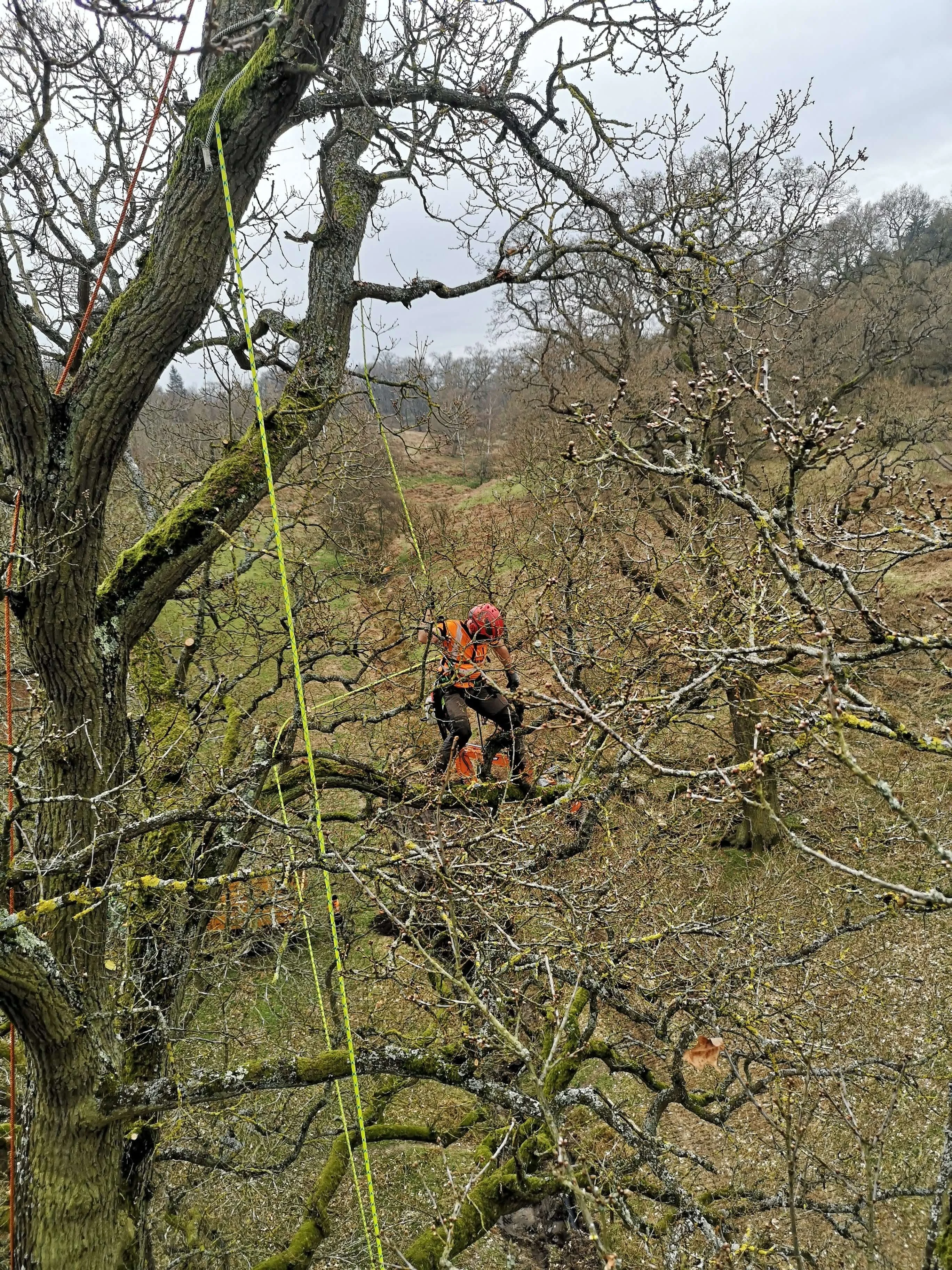
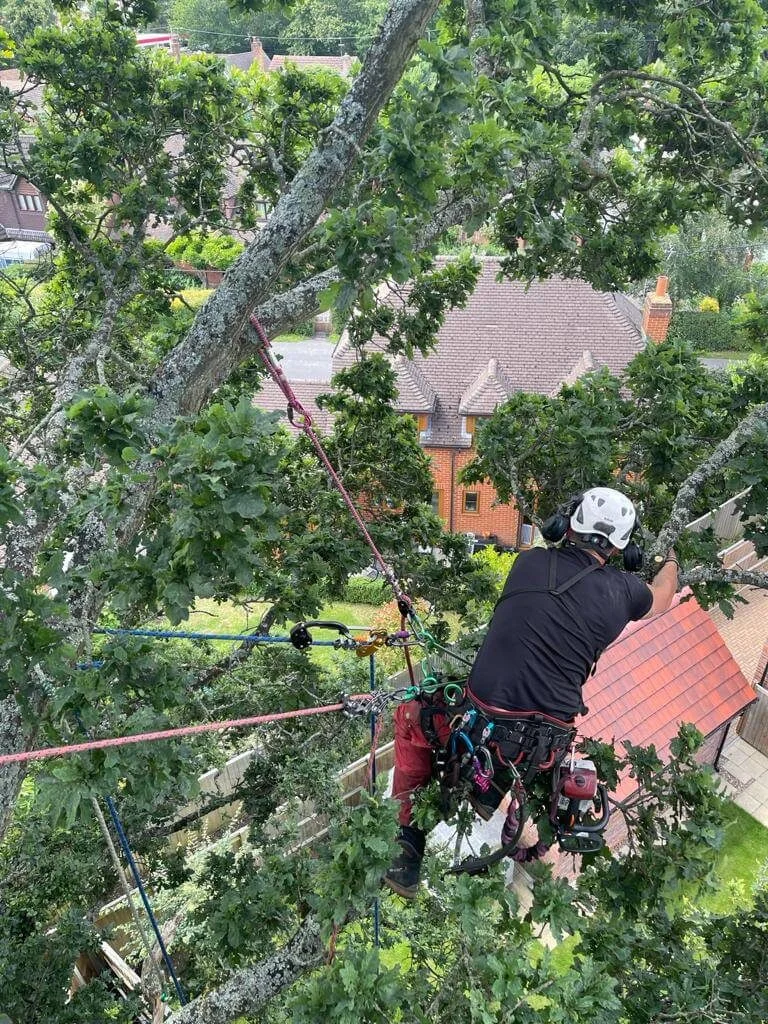
For many jobs, Il Tree Climber uses tree climbing techniques, accessing and moving through the crown using ropes and specific positioning systems.
Pruning by tree climbing is particularly useful when a tree is very tall, ground space is limited, or access with platforms and mechanical equipment is difficult. Moving directly through the crown also allows close observation of the tree and precise access to the branches that need work.
What is sometimes searched for as “acrobatic pruning” is, more accurately, pruning carried out using professional rope access and work techniques. Tree climbing doesn’t determine what kind of pruning is done — it’s an access method. Which branches to prune, and how much to intervene, always depends on the characteristics and needs of the individual tree.
Pruning pines, oaks, palms, and other species
Different species have different growth characteristics, structure, and responses to cutting. Pruning a pine, for example, can’t automatically be approached the same way as pruning an oak or another broadleaf tree. Palms also require attention to their particular structure, and work should only be carried out on parts where removal is genuinely indicated.
There’s no “standard pruning” that applies to every tree. The type and intensity of the work is defined based on species, size, age, crown condition, position, and the objective of the pruning.
When is it worth having a tree checked?
An assessment can be useful when:
- the crown hasn’t been managed for many years
- branches have grown excessively towards buildings or other structures
- there are broken or damaged branches
- part of the crown appears strongly unbalanced
- the tree has undergone very aggressive pruning in the past
- you want to properly plan the maintenance of a large tree
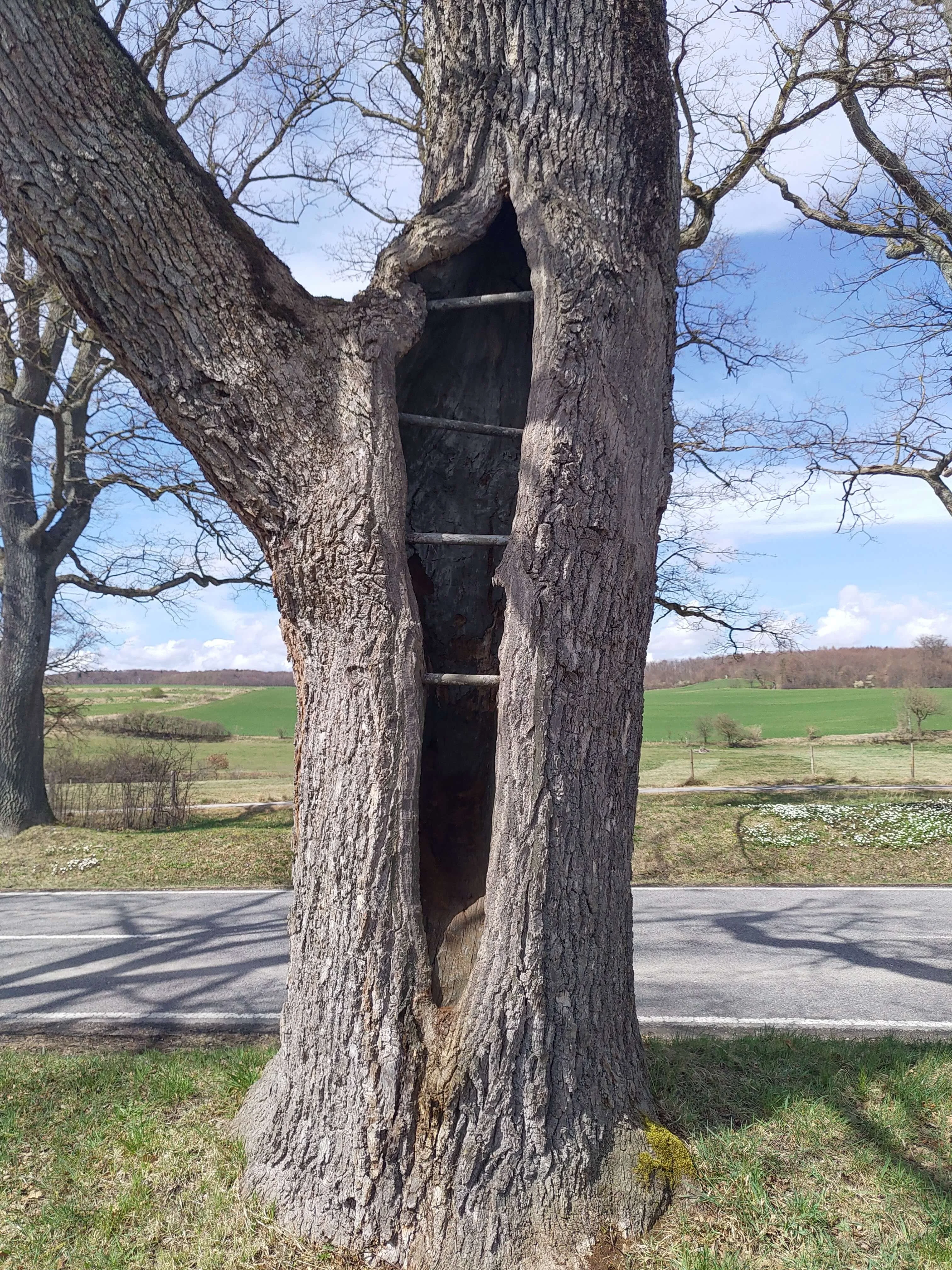
A very large branch or an extensive crown doesn’t automatically mean a tree is dangerous. Before intervening, it’s best to establish whether a problem genuinely exists and what type of pruning is actually appropriate.
How much does it cost to prune a tree?
The cost of pruning a tree can’t be determined by height alone. Price depends on several factors, including:
- crown size and structure
- tree species
- quantity and size of branches to be removed
- ease or difficulty of access
- presence of buildings, walls, roads, or other obstacles
- whether material can be dropped freely or needs to be lowered under control
- amount of resulting material and how it’s handled
This means the cost of pruning a tall tree can vary considerably from case to case. The same applies to questions like “how much does it cost to prune a pine?” or “how much does it cost to prune an oak?” — species and height matter, but aren’t enough on their own to set the price.
Assessing the tree and the surrounding space makes it possible to define the work needed and provide a quote consistent with the job actually required.
Work planned with the tree’s future in mind
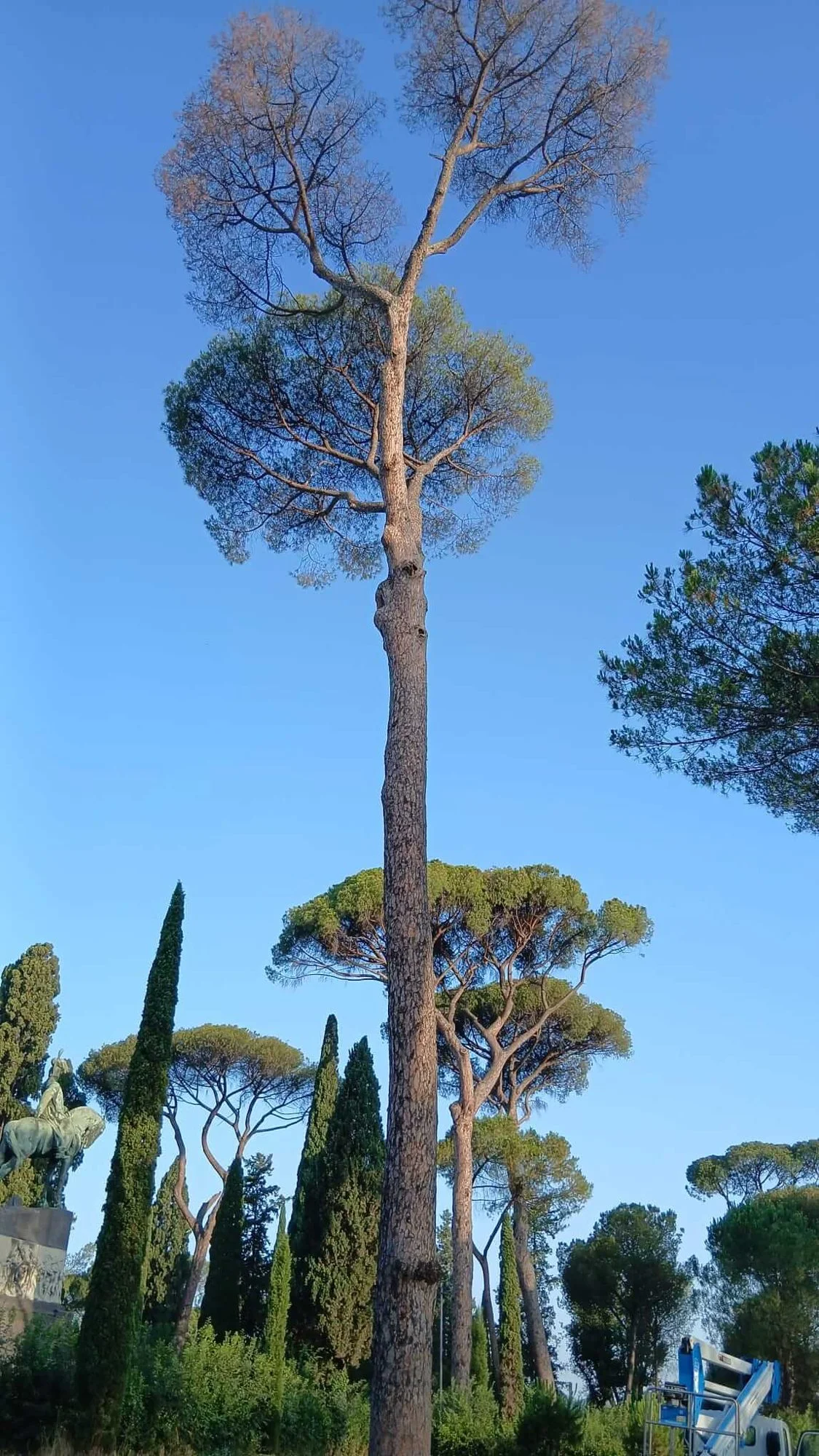
Pruning shouldn’t just solve an immediate need. Well-planned work also considers how the tree will keep developing in the years ahead. Correctly reducing a load, correcting a structural issue, or guiding the growth of a young tree can prevent the need for more invasive work later.
For this reason, Il Tree Climber favours a gradual, considered approach to crown management, respecting the tree’s natural structure as far as possible.
Need a tree pruned?
If you need pruning work done — even on a large tree or in a hard-to-reach spot — you can request an assessment of the job. After considering the tree’s characteristics, crown condition, and surrounding space, the most appropriate type of pruning can be identified.
Contact Il Tree Climber to request an assessment and a quote.